


Page 486 - 9780077418427.pdf
P. 486
/Users/user-f465/Desktop
          tiL12214_ch18_455-476.indd Page 463  9/3/10  6:21 PM user-f465
          tiL12214_ch18_455-476.indd Page 463  9/3/10  6:21 PM user-f465                                                /Users/user-f465/Desktop


                                                       Iceland
                                                       Iceland


                        20

                                                  Cape Verde Islands
                        0


                        20


                        40                 Mid-Atlantic
                                            Ridge and
                                            Rift Valley
                            120  100  80   60  40    20   0   20   40  60
                                                                                                     0–5 million years
                                                                                                     5–23 million years
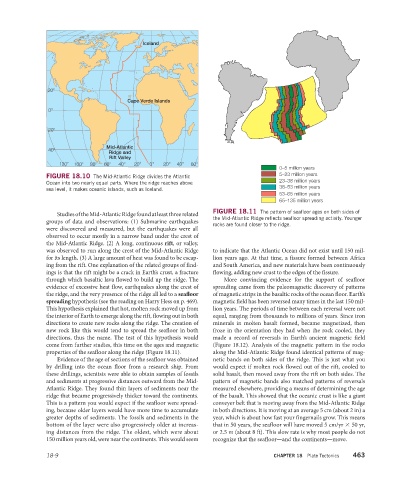
                       FIGURE 18.10  The Mid-Atlantic Ridge divides the Atlantic
                       Ocean into two nearly equal parts. Where the ridge reaches above              23–38 million years
                       sea level, it makes oceanic islands, such as Iceland.                         38–53 million years
                                                                                                     53–65 million years
                                                                                                     65–135 million years

                           Studies of the Mid-Atlantic Ridge found at least three related   FIGURE 18.11  The pattern of seafloor ages on both sides of
                                                                               the Mid-Atlantic Ridge reflects seafloor spreading activity. Younger
                       groups of data and observations: (1) Submarine earthquakes
                                                                               rocks are found closer to the ridge.
                       were discovered and measured, but the earthquakes were all
                       observed to occur mostly in a narrow band under the crest of
                       the Mid-Atlantic Ridge. (2) A long, continuous rift, or valley,
                       was observed to run along the crest of the Mid- Atlantic Ridge   to indicate that the Atlantic Ocean did not exist until 150 mil-
                       for its length. (3) A large amount of heat was found to be escap-  lion years ago. At that time, a fissure formed between Africa
                       ing from the rift. One explanation of the related groups of find-  and South America, and new materials have been continuously
                       ings is that the rift might be a crack in Earth’s crust, a fracture   flowing, adding new crust to the edges of the fissure.
                       through which basaltic lava flowed to build up the ridge. The   More convincing evidence for the support of seafloor
                       evidence of excessive heat flow, earthquakes along the crest of   spreading came from the paleomagnetic discovery of patterns
                       the ridge, and the very presence of the ridge all led to a seafl oor   of magnetic strips in the basaltic rocks of the ocean floor. Earth’s
                       spreading  hypothesis (see the reading on Harry Hess on p. 469).     magnetic field has been reversed many times in the last 150 mil-
                       This  hypothesis explained that hot, molten rock moved up from   lion years. The periods of time between each reversal were not
                       the interior of Earth to emerge along the rift, flowing out in both   equal, ranging from thousands to millions of years. Since iron
                       directions to create new rocks along the ridge. The creation of   minerals in molten basalt formed, became magnetized, then
                       new rock like this would tend to spread the seafloor in both   froze in the orientation they had when the rock cooled, they
                         directions, thus the name. The test of this hypothesis would   made a record of reversals in Earth’s ancient magnetic field
                       come from further studies, this time on the ages and magnetic     (Figure 18.12). Analysis of the magnetic pattern in the rocks
                       properties of the seafloor along the ridge (Figure 18.11).  along the Mid-Atlantic Ridge found identical  patterns of mag-
                           Evidence of the age of sections of the seafloor was obtained   netic bands on both sides of the ridge. This is just what you
                       by drilling into the ocean floor from a research ship. From   would expect if molten rock flowed out of the rift, cooled to
                       these drillings, scientists were able to obtain samples of fossils   solid basalt, then moved away from the rift on both sides. The
                       and sediments at progressive distances outward from the Mid-   pattern of magnetic bands also matched patterns of reversals
                       Atlantic Ridge. They found thin layers of sediments near the   measured elsewhere, providing a means of determining the age
                       ridge that became progressively thicker toward the continents.   of the basalt. This showed that the oceanic crust is like a giant
                       This is a pattern you would expect if the seafloor were spread-  conveyer belt that is moving away from the Mid- Atlantic Ridge
                       ing, because older layers would have more time to accumulate   in both directions. It is moving at an average 5 cm (about 2 in) a
                       greater depths of sediments. The fossils and sediments in the   year, which is about how fast your fingernails grow. This means
                       bottom of the layer were also progressively older at increas-  that in 50 years, the seafloor will have moved 5 cm/yr × 50 yr,
                       ing distances from the ridge. The oldest, which were about   or 2.5 m (about 8 ft). This slow rate is why most people do not
                         150 million years old, were near the continents. This would seem   recognize that the seafloor—and the continents—move.

                       18-9                                                                        CHAPTER 18  Plate Tectonics   463

