


Page 580 - 9780077418427.pdf
P. 580
/Volume/201/MHDQ233/tat78194_disk1of1/0073378194/tat78194_pagefile
          tiL12214_ch22_541-564.indd Page 557  9/23/10  11:08 AM user-f465
          tiL12214_ch22_541-564.indd Page 557  9/23/10  11:08 AM user-f465             /Volume/201/MHDQ233/tat78194_disk1of1/0073378194/tat78194_pagefiles


                                                   Condensation nucleus
                                                   (0.2 micron)

                                            Average cloud droplet
                                            (20 microns)


                                        Large cloud droplet
                                        (100 microns)


                                   Drizzle droplet
                                   (300 microns)


                                          Average raindrop
                                          (2,000 microns)

                                                                               A
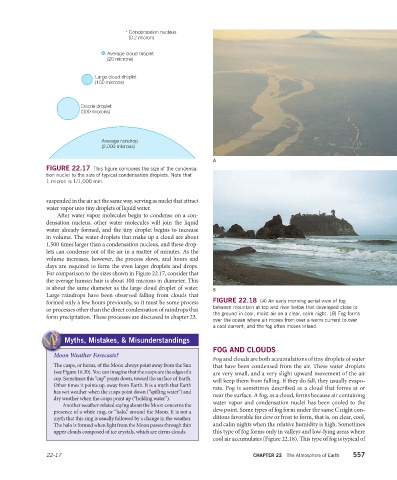
                       FIGURE 22.17  This figure compares the size of the condensa-
                       tion nuclei to the size of typical condensation droplets. Note that
                       1 micron is 1/1,000 mm.


                       suspended in the air act the same way, serving as nuclei that  attract
                       water vapor into tiny droplets of liquid water.
                           After water vapor molecules begin to condense on a con-
                       densation nucleus, other water molecules will join the liquid
                       water  already formed, and the tiny droplet begins to increase
                       in volume. The water droplets that make up a cloud are about
                         1,500 times larger than a condensation nucleus, and these drop-
                       lets can condense out of the air in a matter of minutes. As the
                       volume increases, however, the process slows, and hours and
                       days are  required to form the even larger droplets and drops.
                       For comparison to the sizes shown in Figure 22.17, consider that
                       the average human hair is about 100 microns in diameter. This
                       is about the same diameter as the large cloud droplet of water.   B
                       Large raindrops have been observed falling from clouds that
                       formed only a few hours previously, so it must be some process   FIGURE 22.18  (A) An early morning aerial view of fog
                                                                               between mountain at top and river below that developed close to
                       or processes other than the direct condensation of raindrops that
                                                                               the ground in cool, moist air on a clear, calm night. (B) Fog forms
                       form precipitation. These processes are discussed in chapter 23.
                                                                               over the ocean where air moves from over a warm current to over
                                                                               a cool current, and the fog often moves inland.
                              Myths, Mistakes, & Misunderstandings
                                                                               FOG AND CLOUDS
                          Moon Weather Forecasts?
                                                                               Fog and clouds are both accumulations of tiny droplets of water
                          The cusps, or horns, of the Moon always point away from the Sun   that have been condensed from the air. These water droplets
                          (see Figure 16.30). You can imagine that the cusps are the edges of a   are very small, and a very slight upward movement of the air
                          cup. Sometimes this “cup” points down, toward the surface of Earth.
                                                                               will keep them from falling. If they do fall, they usually evapo-
                          Other times it points up, away from Earth. It is a myth that Earth
                                                                               rate. Fog is sometimes described as a cloud that forms at or
                          has wet weather when the cusps point down (“spilling water”) and
                                                                               near the surface. A fog, as a cloud, forms because air containing
                          dry weather when the cusps point up (“holding water”).
                                                                               water vapor and condensation nuclei has been cooled to the
                             Another weather-related saying about the Moon concerns the
                                                                               dew point. Some types of fog form under the same C night con-
                          presence of a white ring, or “halo,” around the Moon. It is not a
                          myth that this ring is usually followed by a change in the weather.   ditions  favorable for dew or frost to form, that is, on clear, cool,
                          The halo is formed when light from the Moon passes through thin   and calm nights when the relative  humidity is high. Sometimes
                          upper clouds composed of ice crystals, which are cirrus clouds.  this type of fog forms only in valleys and low-lying areas where
                                                                               cool air accumulates (Figure 22.18). This type of fog is typical of
                       22-17                                                                CHAPTER 22  The Atmosphere of Earth   557

