


Page 576 - 9780077418427.pdf
P. 576
/Volume/201/MHDQ233/tat78194_disk1of1/0073378194/tat78194_pagefiles
          tiL12214_ch22_541-564.indd Page 553  9/23/10  11:08 AM user-f465
          tiL12214_ch22_541-564.indd Page 553  9/23/10  11:08 AM user-f465             /Volume/201/MHDQ233/tat78194_disk1of1/0073378194/tat78194_pagefile


                                                                                  Over 98 percent of all the water on Earth exists in the liquid
                                                Polar easterlies
                                             N                                 state, mostly in the ocean, and only a small, variable amount of
                                                       60°                     water vapor is in the atmosphere at any given time. Since so much
                                                           Prevailing
                                            Low            westerlies          water seems to fall as rain or snow at times, it may be a surprise that
                                                            30°                the overall atmosphere really does not contain very much water
                                                              Horse latitudes  vapor. If the average amount of water vapor in Earth’s atmosphere
                                            High                               were condensed to liquid form, the vapor and all the droplets pres-
                                                                Northeast
                                                                trade winds    ent in clouds would form a uniform layer around Earth only 3 cm
                                            Low                0°  Doldrums    (about 1 in) thick. Nonetheless, it is this small amount of water va-
                                                                               por that is eventually responsible for (1) contributing to the green-
                                                                Southeast
                                                                trade winds    house effect, which helps make Earth a warmer planet, (2) serving
                                            High                               as one of the principal agents in the weathering and erosion of
                                                              Horse latitudes  the land, which creates soils and sculptures the landscape, and
                                                            30°                (3) maintaining life, for almost all plants and animals cannot sur-
                                            Low            Prevailing          vive without water. It is the ongoing cycling of water vapor into
                                                       60°  westerlies         and out of the atmo sphere that makes all this possible. Under-
                                                Polar easterlies               standing this cycling process and the energy exchanges involved
                                                                               is also closely related to understanding Earth’s weather patterns.
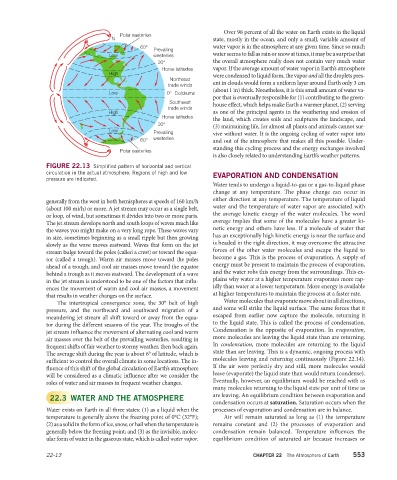
                       FIGURE 22.13  Simplified pattern of horizontal and vertical
                       circulation in the actual atmosphere. Regions of high and low   EVAPORATION AND CONDENSATION
                       pressure are indicated.
                                                                               Water tends to undergo a liquid-to-gas or a gas-to-liquid phase
                                                                               change at any temperature. The phase change can occur in
                       generally from the west in both hemispheres at speeds of 160 km/h     either direction at any temperature. The temperature of liquid
                       (about 100 mi/h) or more. A jet stream may occur as a single belt,   water and the temperature of water vapor are associated with
                       or loop, of wind, but sometimes it divides into two or more parts.   the  average kinetic energy of the water molecules. The word
                       The jet stream develops north and south loops of waves much like     average implies that some of the molecules have a greater ki-
                       the waves you might make on a very long rope. These waves vary   netic energy and others have less. If a molecule of water that
                       in size, sometimes beginning as a small ripple but then growing   has an exceptionally high kinetic energy is near the surface and
                       slowly as the wave moves  eastward. Waves that form on the jet   is headed in the right direction, it may overcome the attractive
                       stream bulge toward the poles (called a crest) or toward the equa-  forces of the other water molecules and escape the liquid to
                       tor (called a trough). Warm air masses move toward the poles   become a gas. This is the process of evaporation. A supply of
                       ahead of a trough, and cool air masses move toward the equator   energy must be present to maintain the process of evaporation,
                       behind a trough as it moves eastward. The development of a wave   and the water robs this energy from the surroundings. This ex-
                       in the jet stream is understood to be one of the factors that influ-  plains why  water at a higher temperature evaporates more rap-
                       ences the movement of warm and cool air masses, a movement   idly than  water at a lower temperature. More energy is available
                       that results in weather changes on the surface.         at higher temperatures to maintain the process at a faster rate.
                           The intertropical convergence zone, the 30° belt of high   Water molecules that evaporate move about in all directions,
                       pressure, and the northward and southward migration of a   and some will strike the liquid surface. The same forces that it
                         meandering jet stream all shift toward or away from the equa-  escaped from earlier now capture the molecule, returning it
                       tor during the different seasons of the year. The troughs of the   to the liquid state. This is called the process of condensation.
                       jet stream influence the movement of alternating cool and warm   Condensation is the opposite of evaporation. In  evaporation,
                       air masses over the belt of the prevailing westerlies, resulting in   more molecules are leaving the liquid state than are returning.
                       frequent shifts of fair weather to stormy weather, then back again.   In  condensation, more molecules are returning to the liquid
                       The average shift during the year is about 6° of latitude, which is   state than are leaving. This is a dynamic, ongoing process with
                       sufficient to control the overall climate in some locations. The in-  molecules leaving and returning continuously (Figure 22.14).
                       fluence of this shift of the global circulation of Earth’s atmosphere   If the air were perfectly dry and still, more molecules would
                       will be considered as a climatic influence  after we consider the   leave (evaporate) the liquid state than would  return (condense).
                       roles of water and air masses in frequent weather changes.  Eventually, however, an equilibrium would be reached with as
                                                                               many molecules returning to the liquid state per unit of time as
                                                                               are leaving. An equilibrium condition  between evaporation and
                         22.3  WATER AND THE ATMOSPHERE
                                                                               condensation occurs at saturation. Saturation occurs when the
                       Water exists on Earth in all three states: (1) as a liquid when the   processes of evaporation and condensation are in balance.
                       temperature is generally above the freezing point of 0°C (32°F);   Air will remain saturated as long as (1) the temperature
                       (2) as a solid in the form of ice, snow, or hail when the temperature is     remains constant and (2) the processes of evaporation and
                       generally below the freezing point; and (3) as the invisible, molec-    condensation remain balanced. Temperature influences the
                       ular form of water in the gaseous state, which is called water vapor.  equilibrium condition of saturated air because increases or

                       22-13                                                                CHAPTER 22  The Atmosphere of Earth   553

