


Page 637 - 9780077418427.pdf
P. 637
/Volume/201/MHDQ233/tat78194_disk1of1/0073378194/tat78194_pagefiles
          tiL12214_ch24_597-622.indd Page 614  9/23/10  11:09 AM user-f465
          tiL12214_ch24_597-622.indd Page 614  9/23/10  11:09 AM user-f465             /Volume/201/MHDQ233/tat78194_disk1of1/0073378194/tat78194_pagefile


                                                                          ter, so it sinks and displaces water of less salinity. Likewise, sea-
                                                                          water with a larger amount of suspended sediments has a higher
                                                                          relative density than clear water, so it sinks and displaces clear
                                                                          water. The following describes how these three ways of chang-
                                                                          ing the density of seawater result in the ocean current known as
                                                                          a density current, which is an ocean current that flows because
                                                                          of density differences.
                                                                             Earth receives more incoming solar radiation in the trop-
                                                                          ics than it does at the poles, which establishes a temperature
                                                                            difference between the tropical and polar oceans. The surface
                                                                          water in the polar ocean is often at or below the freezing point
                                                                          of freshwater, while the surface water in the tropical ocean av-
                                                                          erages about 26°C (about 79°F). Seawater freezes at a tempera-
                                                                          ture below that of freshwater because the salt content lowers
                                                                          the freezing point. Seawater does not have a set freezing point,
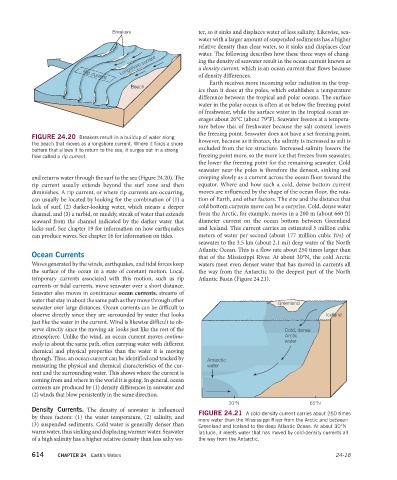
                   FIGURE 24.20  Breakers result in a buildup of water along
                   the beach that moves as a longshore current. Where it finds a shore   however, because as it freezes, the salinity is increased as salt is
                                                                          excluded from the ice structure. Increased salinity lowers the
                   bottom that allows it to return to the sea, it surges out in a strong
                   flow called a rip current.                             freezing point more, so the more ice that freezes from seawater,
                                                                          the lower the freezing point for the remaining seawater. Cold
                                                                          seawater near the poles is therefore the densest, sinking and
                   and returns water through the surf to the sea (Figure 24.20). The   creeping slowly as a current across the ocean floor toward the
                   rip current usually extends beyond the surf zone and then   equator. Where and how such a cold, dense bottom current
                     diminishes. A rip current, or where rip currents are occurring,   moves are influenced by the shape of the ocean floor, the rota-
                   can usually be located by looking for the combination of (1) a   tion of Earth, and other factors. The size and the distance that
                   lack of surf, (2) darker-looking water, which means a deeper   cold bottom currents move can be a surprise. Cold, dense water
                   channel, and (3) a turbid, or muddy, streak of water that extends   from the Arctic, for example, moves in a 200 m (about 660 ft)
                   seaward from the channel indicated by the darker water that   diameter current on the ocean bottom between Greenland
                   lacks surf. See chapter 19 for information on how earthquakes   and Iceland. This current  carries an estimated 5 million cubic
                   can produce waves. See chapter 16 for information on tides.  meters of water per second (about 177 million cubic ft/s) of
                                                                            seawater to the 3.5 km (about 2.1 mi) deep water of the North
                                                                          Atlantic Ocean. This is a flow rate about 250 times larger than
                   Ocean Currents                                         that of the Mississippi River. At about 30°N, the cold Arctic
                   Waves generated by the winds, earthquakes, and tidal forces keep     waters meet even denser water that has moved in currents all
                   the surface of the ocean in a state of constant motion. Local,   the way from the Antarctic to the deepest part of the North
                    temporary currents associated with this motion, such as rip     Atlantic Basin (Figure 24.21).
                   currents or tidal currents, move seawater over a short distance.
                     Seawater also moves in continuous ocean currents, streams of
                   water that stay in about the same path as they move through other
                   seawater over large distances. Ocean currents can be difficult to
                   observe directly since they are surrounded by water that looks
                   just like the water in the current. Wind is likewise difficult to ob-
                   serve  directly since the moving air looks just like the rest of the
                   at mosphere. Unlike the wind, an ocean current moves continu-
                   ously in about the same path, often carrying water with  different
                   chemical and physical properties than the water it is moving
                   through. Thus, an ocean current can be identified and tracked by
                   measuring the physical and chemical characteristics of the cur-
                   rent and the surrounding water. This shows where the current is
                   coming from and where in the world it is going. In general, ocean
                   currents are produced by (1) density differences in seawater and
                   (2) winds that blow persistently in the same direction.

                     Density Currents. The density of seawater is influenced
                                                                            FIGURE 24.21  A cold-density current carries about 250 times
                   by three factors: (1) the water temperature, (2) salinity, and
                                                                          more water than the Mississippi River from the Arctic and between
                   (3) sus pended sediments. Cold water is generally denser than   Greenland and Iceland to the deep Atlantic Ocean. At about 30°N
                   warm water, thus sinking and displacing warmer water. Sea water   latitude, it meets water that has moved by cold-density currents all
                   of a high salinity has a higher relative density than less salty wa-  the way from the Antarctic.

                   614     CHAPTER 24 Earth’s Waters                                                                   24-18

