


Page 632 - 9780077418427.pdf
P. 632
/Volume/201/MHDQ233/tat78194_disk1of1/0073378194/tat78194_pagefile
          tiL12214_ch24_597-622.indd Page 609  9/23/10  11:09 AM user-f465
          tiL12214_ch24_597-622.indd Page 609  9/23/10  11:09 AM user-f465             /Volume/201/MHDQ233/tat78194_disk1of1/0073378194/tat78194_pagefiles


                                                       +
                             1,000 g          965 g
                            seawater          water          35 g salts


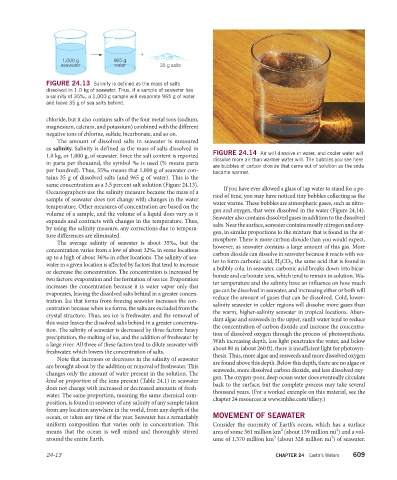
                       FIGURE 24.13  Salinity is defined as the mass of salts
                       dissolved in 1.0 kg of seawater. Thus, if a sample of seawater has
                       a salinity of 35‰, a 1,000 g sample will evaporate 965 g of water
                       and leave 35 g of sea salts behind.


                       chloride, but it also contains salts of the four metal ions (sodium,
                       magnesium, calcium, and potassium) combined with the different
                       negative ions of chlorine, sulfate, bicarbonate, and so on.
                           The amount of dissolved salts in seawater is measured
                       as  salinity. Salinity is defined as the mass of salts dissolved in
                       1.0 kg, or 1,000 g, of seawater. Since the salt content is reported   FIGURE 24.14  Air will dissolve in water, and cooler water will
                                                                               dissolve more air than warmer water will. The bubbles you see here
                       in parts per thousand, the symbol ‰ is used (% means parts
                                                                               are bubbles of carbon dioxide that came out of solution as the soda
                       per hundred). Thus, 35‰ means that 1,000 g of seawater con-  became warmer.
                       tains 35 g of dissolved salts (and 965 g of water). This is the
                       same  concentration as a 3.5 percent salt solution (Figure 24.13).   If you have ever allowed a glass of tap water to stand for a pe-
                       Oceanographers use the salinity measure because the mass of a   riod of time, you may have noticed tiny bubbles collecting as the
                       sample of seawater does not change with changes in the water   water warms. These bubbles are atmospheric gases, such as nitro-
                       temperature. Other measures of concentration are based on the   gen and oxygen, that were dissolved in the water (Figure 24.14).
                       volume of a sample, and the volume of a liquid does vary as it   Seawater also contains dissolved gases in addition to the dissolved
                       expands and contracts with changes in the temperature. Thus,   salts. Near the surface, seawater contains mostly nitrogen and oxy-
                       by using the salinity measure, any corrections due to tempera-  gen, in similar proportions to the mixture that is found in the at-
                       ture differences are eliminated.                        mosphere. There is more carbon dioxide than you would expect,
                           The average salinity of seawater is about 35‰, but the
                         concentration varies from a low of about 32‰ in some locations   however, as seawater contains a large amount of this gas. More
                                                                               carbon dioxide can dissolve in seawater because it reacts with wa-
                       up to a high of about 36‰ in other locations. The salinity of sea-  ter to form carbonic acid, H 2 CO 3 , the same acid that is found in
                       water in a given location is affected by factors that tend to increase   a bubbly cola. In sea water, carbonic acid breaks down into bicar-
                       or decrease the concentration. The concentration is  increased by   bonate and carbonate ions, which tend to remain in solution. Wa-
                       two factors: evaporation and the formation of sea ice. Evapo ration   ter temperature and the salinity have an influence on how much
                       increases the concentration because it is water vapor only that   gas can be dissolved in sea water, and increasing either or both will
                       evaporates, leaving the dissolved salts behind in a greater concen-  reduce the amount of gases that can be dissolved. Cold, lower-
                       tration. Ice that forms from freezing seawater increases the con-    salinity seawater in colder regions will dissolve more gases than
                       centration because when ice forms, the salts are excluded from the   the warm, higher-salinity seawater in tropical locations. Abun-
                       crystal structure. Thus, sea ice is freshwater, and the removal of   dant algae and  seaweeds in the upper, sunlit water tend to reduce
                       this water leaves the dissolved salts  behind in a greater concentra-  the  concentration of carbon dioxide and increase the concentra-
                       tion. The salinity of seawater is  decreased by three factors: heavy   tion of dissolved oxygen through the process of photosynthesis.
                       precipitation, the melting of ice, and the addition of freshwater by   With increasing depth, less light penetrates the water, and below
                       a large river. All three of these factors tend to dilute  seawater with   about 80 m (about 260 ft), there is insufficient light for photosyn-
                       freshwater, which  lowers the concentration of salts.   thesis. Thus, more algae and seaweeds and more dissolved oxygen
                           Note that increases or decreases in the salinity of seawater
                       are brought about by the addition or removal of freshwater. This   are found above this depth. Below this depth, there are no algae or
                                                                               seaweeds, more dissolved carbon dioxide, and less dissolved oxy-
                       changes only the amount of water present in the solution. The   gen. The oxygen-poor, deep ocean water does eventually circulate
                       kind or proportion of the ions present (Table 24.1) in  seawater   back to the surface, but the complete process may take several
                       does not change with increased or decreased amounts of fresh-  thousand years. (For a worked example on this material, see the
                       water. The same proportion, meaning the same chemical com-  chapter 24 resources at www.mhhe.com/tillery.)
                       position, is found in seawater of any salinity of any sample taken
                       from any location anywhere in the world, from any depth of the
                       ocean, or taken any time of the year. Seawater has a  remarkably   MOVEMENT OF SEAWATER
                       uniform composition that varies only in concentration. This   Consider the enormity of Earth’s ocean, which has a surface
                                                                                                     2
                                                                                                                        2
                       means that the ocean is well mixed and thoroughly stirred   area of some 361 million km  (about 139 million mi ) and a vol-
                                                                                                   3
                                                                                                                      3
                       around the entire Earth.                                ume of 1,370 million km  (about 328 million mi ) of sea water.
                       24-13                                                                       CHAPTER 24  Earth’s Waters   609

