


Page 587 - MARSIUM'21 COMP OF PAPER
P. 587
566                                        Najihah & Mazilah (2022)

                   2.2.4 Customer Perceived Quality
                   Perceived quality indicates a consumer's assessment of a brand's overall superiority and excellence (Erdil, 2015). According to
            Dursun et al. (2011), perceived quality is a crucial factor to consider in brand equity. It is defined as an intangible general feeling about a
            brand that is typically dependent on underlying dimensions such as product features tied to the brand, such as performance and dependability,
            among other things. Consumer perception will eventually influence customer satisfaction with a product, determining consumers' decision
            to repurchase the product (Kusuma et al., 2015). As a result, the consumer's happiness after purchasing the product, such as its wonderful
            taste and freshness, determines its overall quality. Based on the reasoning provided above, the researcher hypothesised:

                   H 4: Customer perceived quality has a significant positive influence on customer satisfaction.

                   2.2.5 Location
                      Thousands of businesses fail to expand simply because they make the wrong judgement about where to put their operations.
            Marketing is sometimes more important to businesses than location difficulties to grab the attention of potential customers and clients. The
            geographical  location  of  business  endeavours  can  considerably  impact  the  success  of  their  operations,  particularly  in  today's  highly
            competitive business environment. According to studies by Dulkhatif, Haryono, and Warso (2016);  Wirawan, Sjahrudin, and Razak (2019);
            Hermanto, Apriansyah, Fikri, and Albetris (2019); and Wirawan, Sjahrudin, and Razak (2019), customer loyalty and satisfaction is favourably
            and significantly affected by the location. The following is the theory, which is based on the preceding description:

                   H 5: Location has a significant positive influence on customer satisfaction.

                   2.3 Research Framework Model
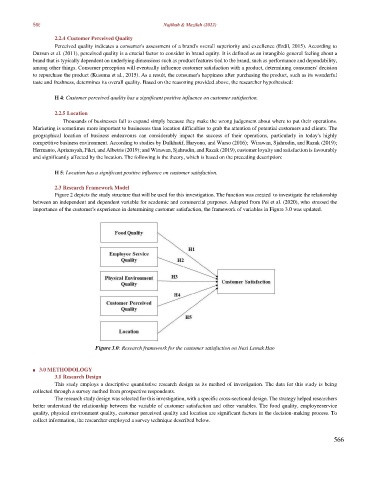
                   Figure 2 depicts the study structure that will be used for this investigation. The function was created  to investigate the relationship
            between an independent and dependent variable for academic and commercial purposes. Adapted from Pei et al. (2020), who stressed the
            importance of the customer's experience in determining customer satisfaction, the framework of variables in Figure 3.0 was updated.


                                 Figure 3.0: Research framework for the customer satisfaction on Nasi Lemak Hao


            ■  3.0 METHODOLOGY
                   3.1 Research Design
                   This study employs a descriptive quantitative research design as its method of investigation. The data for this study is being
            collected through a survey method from prospective respondents.
                   The research study design was selected for this investigation, with a specific cross-sectional design. The strategy helped researchers
            better understand the relationship between the variable of customer satisfaction and other variables. The food quality, employee service
            quality, physical environment quality, customer perceived quality and location are significant factors in the decision-making process. To
            collect information, the researcher employed a survey technique described below.


                                                                                                               566

