


Page 756 - MARSIUM'21 COMP OF PAPER
P. 756
735                                        Alya (2022)

              2.1.1 BRAND LOYALTY

              Brand loyalty is an important determinant of brand equity. Over time, brand loyalty is associated with a favored affective, evaluative,
              and/or behavioral proclivity toward a branded, marked, or graded alternative or product choice (Suki, 2014). According to Aaker, brand
              loyalty is a situation that reflects how likely a customer is to switch to another brand, particularly when that brand changes its price or
              product features (Jalilvand et al., 2011). Similarly, brand loyalty influences customer purchasing decisions for the same goods. In other
              words, people develop brand loyalty and stick to well-known brand names, as well as use it for social recognition (Sun et al., 2004 cited
              in Suki, 2014). Business developed brand loyalty by creating positive brand equity, which results in positive brand preference over
              competing brands (Zhang et al., 2014 cited in Suki, 2014).
              Even though situational circumstances and marketing activities have the potential to cause switching behaviour, Oliver (1997) defines
              brand loyalty as a strongly held commitment to consistently repurchase or recommend a preferred product or service in the future (Jalilvand
              et al., 2011). According to Rossiter and Percy (1987), brand loyalty is generally defined by a positive attitude toward a brand and repeated
              purchases of the same brand over time (Jalilvand et al., 2011). In almost all of the studies, researchers used brand loyalty as a primary
              factor of brand equity because it is the  consumers' loyalty that the companies ultimately seek. So, it can be conclude that Brand loyalty is
              the foundation of brand equity (K Eismann et al., 2016).

            2.2 PURCHASE INTENTION

            Purchase intention is a type of decision-making that looks into why a consumer might want to buy a specific brand (Shah et al., 2012 cited
            in Mirabi et al., 2015). Morinez et al. (2007) define purchase intention as a situation in which a consumer intends to acquire a specific product
            in a specific condition (Mirabi et al., 2015). Individuals who desire to purchase a product will have the strength or drive to undertake a set
            of behaviours to approach or attain the product (Harwani & Sakinah, 2020). Furthermore, Purchase Intention refers to the likelihood that a
            customer will purchase a product willingly. In addition, purchase intention was defined as a customer's projected behaviour in terms of
            purchasing and purchasing a product multiple times, which means after making the decision to buy a product, the consumer would return to
            buy it again (Kasornbua & Pinsame, 2019).

            Making a purchasing decision on behalf  of a customer is a difficult task. Purchase intent  is  frequently linked to consumer behaviour,
            perceptions, and attitudes. The purchasing habits of consumers are an important factor in gaining access to and evaluating a product. Purchase
            intention, according to Ghosh (1990), is a useful tool for predicting the purchasing process (Mirabi et al., 2015). When customers decide to
            buy a product from a specific store or brand, they are motivated by their intent. However, the influence of price, quality perception, and value
            perception on purchase intention may vary (Jaafar, 2018). Furthermore, during the purchasing process, consumers will be interrupted by
            internal impulses as well as the external environment (Jaafar, 2018). If any products or goods brought delight and satisfaction to individuals
            who purchased them, the purchasing intention for such products was a result. The intent to buy a company's product gave it a competitive
            advantage over its competitors. In most cases, the company would notice it after the goods had already been acquired. As a result, firms have
            to prioritised purchase intent because it is a critical instrument in gaining a competitive edge, despite the fact that it is difficult to achieve
            (Kasornbua & Pinsame, 2019).

              2.2.1 CUSTOMER’S JOURNEY TO MAKING A PURCHASE

              Brands must ensure that enough information and support is available as part of their marketing strategies to support the customer’s
              process of making decisions. This is because the way in which customers research and purchase products and services has changed.


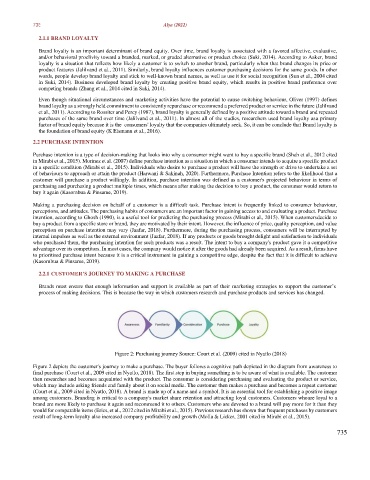
                                       Figure 2: Purchasing journey Source: Court et al. (2009) cited in Nyatlo (2018)

            Figure 2 depicts the customer's journey to make a purchase. The buyer follows a cognitive path depicted in the diagram from awareness to
            final purchase (Court et al., 2009 cited in Nyatlo, 2018). The first step in buying something is to be aware of what is available. The customer
            then researches and becomes acquainted with the product. The consumer is considering purchasing and evaluating the product or service,
            which may include asking friends and family about it on social media. The customer then makes a purchase and becomes a repeat customer
            (Court et al., 2009 cited in Nyatlo, 2018). A brand is made up of a name and a symbol. It is an essential tool for establishing a positive image
            among customers. Branding is critical to a company's market share retention and attracting loyal customers. Customers who are loyal to a
            brand are more likely to purchase it again and recommend it to others. Customers who are devoted to a brand will pay more for it than they
            would for comparable items (Erics, et al., 2012 cited in Mirabi et al., 2015). Previous research has shown that frequent purchases by customers
            result of long-term loyalty also increased company profitability and growth (Molla & Licker, 2001 cited in Mirabi et al., 2015).

                                                                                                                 735

