


Page 14 - DINOSOUR ATLAS
P. 14
dinosaur atlas
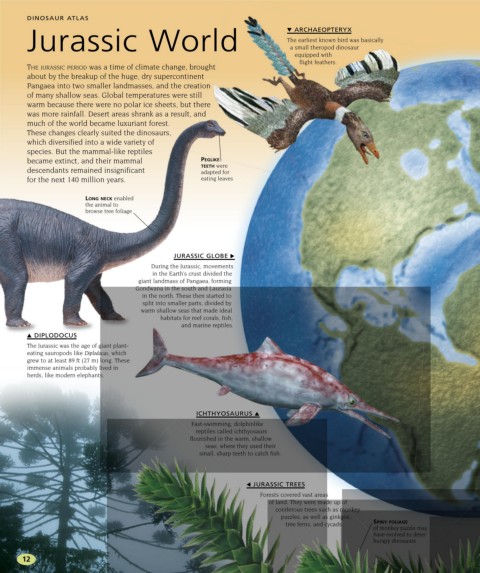
         Jurassic World                                                               d archaeopteryx

                                                                                      The earliest known bird was basically
                                                                                       a small theropod dinosaur
                                                                                         equipped with
                                                                                          flight feathers.
         The jurassic period was a time of climate change, brought
         about by the breakup of the huge, dry supercontinent
         Pangaea into two smaller landmasses, and the creation
         of many shallow seas. Global temperatures were still
         warm because there were no polar ice sheets, but there
         was more rainfall. Desert areas shrank as a result, and
         much of the world became luxuriant forest.
         These changes clearly suited the dinosaurs,
         which diversified into a wide variety of
         species. But the mammal-like reptiles
         became extinct, and their mammal                    peglike
         descendants remained insignificant                  teeth were
                                                             adapted for
         for the next 140 million years.                     eating leaves

                          long neck enabled
                          the animal to
                          browse tree foliage


                                                     Jurassic Globe .
                                              During the Jurassic, movements
                                              in the Earth’s crust divided the
                                          giant landmass of Pangaea, forming
                                         Gondwana in the south and Laurasia
                                           in the north. These then started to
                                           split into smaller parts, divided by
                                           warm shallow seas that made ideal
                                                 habitats for reef corals, fish,
                                                       and marine reptiles.
         u diplodocus
         The Jurassic was the age of giant plant-
         eating sauropods like Diplodocus, which
         grew to at least 89 ft (27 m) long. These
         immense animals probably lived in
         herds, like modern elephants.


                                                           ichthyosaurus u
                                                          Fast-swimming, dolphinlike
                                                           reptiles called ichthyosaurs
                                                          flourished in the warm, shallow
                                                              seas, where they used their
                                                            small, sharp teeth to catch fish.


                                                                          , Jurassic trees
                                                                              Forests covered vast areas
                                                                                 of land. They were made up of
                                                                                   coniferous trees such as monkey
                                                                                     puzzles, as well as ginkgos,
                                                                                      tree ferns, and cycads.   Spiny foliage
                                                                                                                of monkey puzzle may
                                                                                                                have evolved to deter
                                                                                                                hungry dinosaurs

       12

