


Page 21 - DINOSOUR ATLAS
P. 21
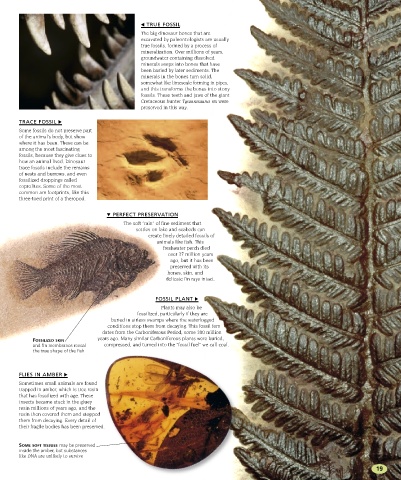
, true fossil
                                                   The big dinosaur bones that are
                                                   excavated by paleontologists are usually
                                                   true fossils, formed by a process of
                                                   mineralization. Over millions of years,
                                                   groundwater containing dissolved
                                                   minerals seeps into bones that have
                                                   been buried by later sediments. The
                                                   minerals in the bones turn solid,
                                                   somewhat like limescale forming in pipes,
                                                   and this transforms the bones into stony
                                                   fossils. These teeth and jaws of the giant
                                                   Cretaceous hunter Tyrannosaurus rex were
                                                   preserved in this way.


        trace fossil .
        Some fossils do not preserve part
        of the animal’s body, but show
        where it has been. These can be
        among the most fascinating
        fossils, because they give clues to
        how an animal lived. Dinosaur
        trace fossils include the remains
        of nests and burrows, and even
        fossilized droppings called
        coprolites. Some of the most
        common are footprints, like this
        three-toed print of a theropod.

                                       d perfect preservation
                                             The soft “rain” of fine sediment that
                                                 settles on lake and seabeds can
                                                      create finely detailed fossils of
                                                         animals like fish. This
                                                           freshwater perch died
                                                             over 37 million years
                                                              ago, but it has been
                                                              preserved with its
                                                             bones, skin, and
                                                            delicate fin rays intact.


                                                        fossil plant .
                                                          Plants may also be
                                                  fossilized, particularly if they are
                                         buried in airless swamps where the waterlogged
                                       conditions stop them from decaying. This fossil fern
                                     dates from the Carboniferous Period, some 300 million
             fossiLized skin        years ago. Many similar Carboniferous plants were buried,
             and fin membranes reveal   compressed, and turned into the “fossil fuel” we call coal.
             the true shape of the fish


        flies in aMber .
        Sometimes small animals are found
        trapped in amber, which is tree resin
        that has fossilized with age. These
        insects became stuck in the gluey
        resin millions of years ago, and the
        resin then covered them and stopped
        them from decaying. Every detail of
        their fragile bodies has been preserved.


        soMe soft tissues may be preserved
        inside the amber, but substances
        like DNA are unlikely to survive
                                                                                                                                       19

