


Page 23 - DINOSOUR ATLAS
P. 23
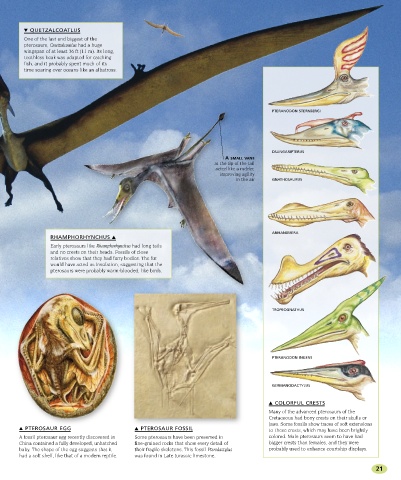
d quetzalCoatlus
          One of the last and biggest of the
          pterosaurs, Quetzalcoatlus had a huge
          wingspan of at least 36 ft (11 m). Its long,
          toothless beak was adapted for catching
          fish, and it probably spent much of its
          time soaring over oceans like an albatross.


                                                                                                  pteranodon sternbergi


                                                                                                  dsungaripterus
                                                                                 a small vane
                                                                             at the tip of the tail
                                                                              acted like a rudder,
                                                                               improving agility
                                                                                     in the air   gnathosaurus


                                                                                                  anhanguera
                   rhamphorhynChus u
                   Early pterosaurs like Rhamphorhynchus had long tails
                   and no crests on their heads. Fossils of close
                   relatives show that they had furry bodies. The fur
                   would have acted as insulation, suggesting that the
                   pterosaurs were probably warm-blooded, like birds.


                                                                                                  tropeognathus


                                                                                                  pteranodon ingens


                                                                                                  germanodactylus


                                                                                                 u ColorFul Crests
                                                                                                 Many of the advanced pterosaurs of the
                                                                                                 Cretaceous had bony crests on their skulls or
                                                                                                 jaws. Some fossils show traces of soft extensions
        u pterosaur egg                          u pterosaur Fossil                              to these crests, which may have been brightly
        A fossil pterosaur egg recently discovered in   Some pterosaurs have been preserved in    colored. Male pterosaurs seem to have had
        China contained a fully developed, unhatched   fine-grained rocks that show every detail of   bigger crests than females, and they were
        baby. The shape of the egg suggests that it   their fragile skeletons. This fossil Pterodactylus   probably used to enhance courtship displays.
        had a soft shell, like that of a modern reptile.  was found in Late Jurassic limestone.
                                                                                                                                       21

