


Page 22 - DINOSOUR ATLAS
P. 22
dinosaur atlas
         Flying Reptiles


         The biggesT flying animals that have ever existed patrolled the
         skies during the age of the dinosaurs. They were the pterosaurs—
         lightweight flying reptiles that were related to the dinosaurs.
         The smallest were the size of sparrows, but the largest were the
         size of light planes. They had hollow bones like birds, and long,
         typically toothed beaks. Their wings were membranes of elastic
         skin, rather like those of a bat, but unlike a bat’s wings each
         was supported by a single, elongated fourth finger bone,
         and hundreds of tough, reinforcing fibers.


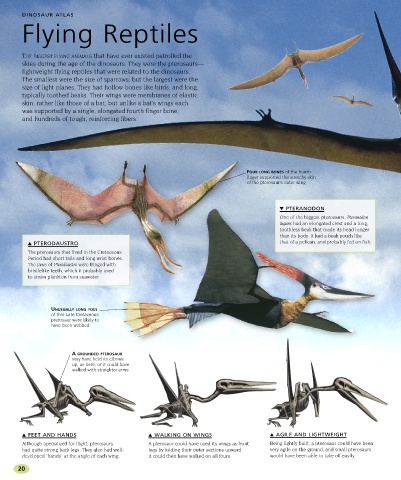
                                                                                         FoUr long bones of the fourth
                                                                                         finger supported the stretchy skin
                                                                                         of the pterosaur’s outer wing


                                                                                                     d pteranodon
                                                                                                     One of the biggest pterosaurs, Pteranodon
                                                                                                     ingens had an elongated crest and a long,
                                                                                                     toothless beak that made its head longer
                                                                                                     than its body. It had a beak pouch like
           u pterodaustro                                                                            that of a pelican, and probably fed on fish.
           The pterosaurs that lived in the Cretaceous
           Period had short tails and long wrist bones.
           The jaws of Pterodaustro were fringed with
           bristlelike teeth, which it probably used
           to strain plankton from seawater.


                   UnUsUally long toes
                   of this Late Cretaceous
                   pterosaur were likely to
                   have been webbed


                           a groUnded pterosaUr
                           may have held its elbows
                           up, as here, or it could have
                           walked with straighter arms


         u Feet and hands                             u walking on wings                         u agile and lightweight
         Although specialized for flight, pterosaurs    A pterosaur could have used its wings as front    Being lightly built, a pterosaur could have been
         had quite strong back legs. They also had well-  legs by folding their outer sections upward.    very agile on the ground, and small pterosaurs
         developed “hands” at the angle of each wing.   It could then have walked on all fours.  would have been able to take off easily.
       20

