


Page 173 - 統測英文制霸
P. 173
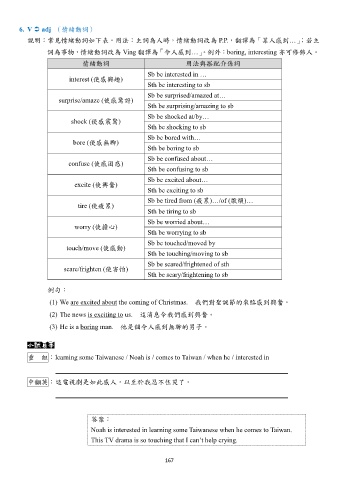
6. V adj (情緒動詞)
說明:常見情緒動詞如下表。用法:主詞為人時,情緒動詞改為 P.P.,翻譯為「某人感到…」;若主
詞為事物,情緒動詞改為 Ving 翻譯為「令人感到…」。例外:boring, interesting 亦可修飾人。
情緒動詞 用法與搭配介係詞
Sb be interested in …
interest (使感興趣)
Sth be interesting to sb
Sb be surprised/amazed at…
surprise/amaze (使感驚訝)
Sth be surprising/amazing to sb
Sb be shocked at/by…
shock (使感震驚)
Sth be shocking to sb
Sb be bored with…
bore (使感無聊)
Sth be boring to sb
Sb be confused about…
confuse (使感困惑)
Sth be confusing to sb
Sb be excited about…
excite (使興奮)
Sth be exciting to sb
Sb be tired from (疲累)…/of (厭煩)…
tire (使疲累)
Sth be tiring to sb
Sb be worried about…
worry (使擔心)
Sth be worrying to sb
Sb be touched/moved by
touch/move (使感動)
Sth be touching/moving to sb
Sb be scared/frightened of sth
scare/frighten (使害怕)
Sth be scary/frightening to sb
例句:
(1) We are excited about the coming of Christmas. 我們對聖誕節的來臨感到興奮。
(2) The news is exciting to us. 這消息令我們感到興奮。
(3) He is a boring man. 他是個令人感到無聊的男子。
小試身手
重 組:learning some Taiwanese / Noah is / comes to Taiwan / when he / interested in
____________________________________________________________________
中翻英:這電視劇是如此感人,以至於我忍不住哭了。
____________________________________________________________________
答案:
Noah is interested in learning some Taiwanese when he comes to Taiwan.
This TV drama is so touching that I can’t help crying.
167

