


Page 30 - (DK Eyewitness) Travel Guide - Australia
P. 30
28 INTRODUCING A USTR ALIA
Flora and Fauna
Forty million years of isolation from other major
land masses have given Australia a collection of flora and
fauna that is unique in the world. Low rainfall and poor soil
has meant meagre food sources, and animals and plants
have evolved some curious adaptations to help them cope.
Surprisingly, these adverse conditions have also produced
incredible biodiversity. Australia has more than 20,000
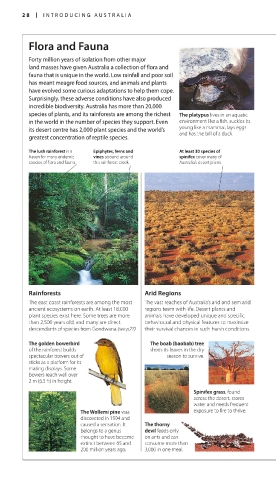
species of plants, and its rainforests are among the richest The platypus lives in an aquatic
in the world in the number of species they support. Even environment like a fish, suckles its
its desert centre has 2,000 plant species and the world’s young like a mammal, lays eggs
and has the bill of a duck.
greatest concentration of reptile species.
The lush rainforest is a Epiphytes, ferns and At least 30 species of
haven for many endemic vines abound around spinifex cover many of
species of flora and fauna. this rainforest creek. Australia’s desert plains.
Rainforests Arid Regions
The east coast rainforests are among the most The vast reaches of Australia’s arid and semiarid
ancient ecosystems on earth. At least 18,000 regions teem with life. Desert plants and
plant species exist here. Some trees are more animals have developed unique and specific
than 2,500 years old, and many are direct behavioural and physical features to maximize
descendants of species from Gondwana (see p27). their survival chances in such harsh conditions.
The golden bowerbird The boab (baobab) tree
of the rainforest builds sheds its leaves in the dry
spectacular bowers out of season to survive.
sticks as a platform for its
mating displays. Some
bowers reach well over
2 m (6.5 ft) in height.
Spinifex grass, found
across the desert, stores
water and needs frequent
The Wollemi pine was exposure to fire to thrive.
discovered in 1994 and
caused a sensation. It The thorny
belongs to a genus devil feeds only
thought to have become on ants and can
extinct between 65 and consume more than
200 million years ago. 3,000 in one meal.

