


Page 38 - (DK Eyewitness) Travel Guide - Australia
P. 38
36 introducing a ustr alia
Aboriginal Art
as traditionally nomadic people with little interest in
decorating their temporary dwellings, aborigines often
expressed their creativity on landscape features such as
rocks and caves (see pp51–2). Many art sites are thousands
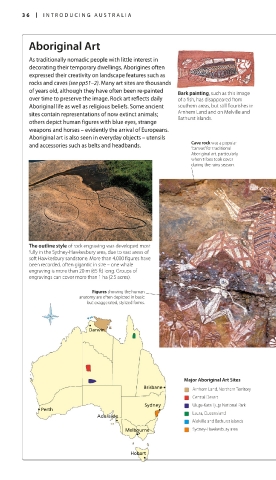
of years old, although they have often been re-painted Bark painting, such as this image
over time to preserve the image. rock art reflects daily of a fish, has disappeared from
aboriginal life as well as religious beliefs. some ancient southern areas, but still flourishes in
sites contain representations of now extinct animals; Arnhem Land and on Melville and
Bathurst islands.
others depict human figures with blue eyes, strange
weapons and horses – evidently the arrival of Europeans.
aboriginal art is also seen in everyday objects – utensils
and accessories such as belts and headbands. C C Cave rock was a popular ave rock was a popular ave rock
“canvas” for traditional
Aboriginal art, particularly
when tribes took cover
during the rainy season.
The outline style of rock engraving was developed most
fully in the Sydney-Hawkesbury area, due to vast areas of
soft Hawkesbury sandstone. More than 4,000 figures have
been recorded, often gigantic in size – one whale
engraving is more than 20 m (65 ft) long. Groups of
engravings can cover more than 1 ha (2.5 acres).
Figures showing the human
anatomy are often depicted in basic
but exaggerated, stylized forms.
•
Darwin
Major Aboriginal Art Sites
Brisbane • Arnhem Land, Northern Territory
Central Desert
Sydney Uluru-Kata Tjuta National Park
• Perth • Laura, Queensland
Adelaide
• Melville and Bathurst islands
Melbourne Sydney-Hawkesbury area
•
Hobart
•

