


Page 50 - Encyclopedia of Aquarium and Pond Fish, 3rd Edition
P. 50
48    FRESHWATER FISH: MAINTENANCE

         Feeding the fish


         Feeding time offers the best opportunity to see your fish
         at close quarters and monitor their well-being. It is also
                                                           SPECIALIST DIETS
         an opportunity to tame your fish, especially if you feed
                                                           Some prepared freshwater fish foods are specially formulated to
         them at the same times each day. Freshwater fish can be   cater to the dietary needs of particular groups of fish. Pellets for
                                                           carnivorous catfish, for example, contain more oil than foodsticks for
         given a wide range of foods, but commercial products   plant-eating cichlids. Aside from protein, oil (fat), and carbohydrates,
         are the most convenient and also the safest option, since   prepared fish foods also contain fiber. In the wild, fish inadvertently
                                                           consume a variety of indigestible items, ranging from plant matter
         diseases may be introduced to the tank along with   to fish scales. This roughage helps to prevent blockages in the
                                                           intestinal tract.
         invertebrate live foods, such as tubifex worms.
                                                                   15% Carbohydrates + moisture  11% Carbohydrates +
                                                                                         moisture
                                                            11% Ash
         Fish require the same key food groups as humans—proteins,
         carbohydrates, fats, vitamins, and minerals. Protein is vital for
         healthy growth, especially in young fish. Raising the level of       13% Ash
         protein in the diet—by providing more live foods, for example—
         helps to bring fish into breeding condition. Carbohydrates fuel
         the body’s processes, and fat forms a protective cushion around      2% Fiber
         organs and acts as an energy store. Vitamins and minerals are      54% Protein
         important for a fish’s metabolism and overall health. Vitamin   7%                        52%
                                                                                                   Protein
                                                            Fiber
         C, for example, helps protect against infection, while calcium   13% Oil  Cichlid sticks  22% Oil  Catfish pellets
         and phosphorus are essential for sound skeletal structure.
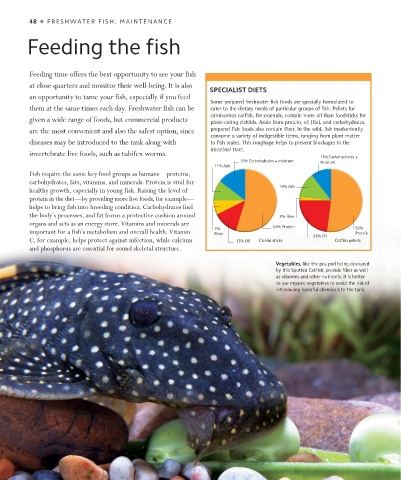
                                                                             Vegetables, like the pea pod being devoured
                                                                             by this Spotted Catfish, provide fiber as well
                                                                             as vitamins and other nutrients. It is better
                                                                             to use organic vegetables to avoid the risk of
                                                                             introducing harmful chemicals to the tank.


   US_048-049_Feeding_Fish.indd   48                                                                 29/08/18   4:08 PM

