


Page 34 - (DK Eyewitness) Travel Guide - Southwest USA & National Parks
P. 34
32 INTRODUCING THE SOUTHWEST A POR TR AIT OF THE SOUTHWEST 33
Native Cultures of the Southwest Hopi Spirituality ancestral lands. However,
both tribes are among the
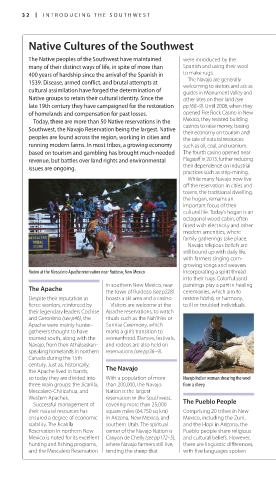
The Native peoples of the Southwest have maintained were introduced by the Religion is a fundamental element of the Hopi lifestyle. Their most anglici zed in the region.
many of their distinct ways of life, in spite of more than Spanish and using their wool religious ceremonies focus on kachina (or katsina), spirit figures The Pima were guides to the
400 years of hardship since the arrival of the Spanish in to make rugs. that symbolize nature in all its forms. Familiar to visitors as the US Army during the Indian
painted, carved wooden dolls available in many gift stores, the
1539. Disease, armed conflict, and brutal attempts at The Navajo are generally kachina lie at the heart of Hopi spirituality. During the growing Wars of the 1860s. Today’s
Tohono O’odham are mainly
welcoming to visitors and act as
cultural assimilation have forged the determination of guides in Monument Valley and season (December to July), these spirit figures are Christian – the mission church
Native groups to retain their cultural identity. Since the other sites on their land (see represented by kachina dancers who visit Hopi of San Xavier del Bac is on
late 19th century they have campaigned for the restoration pp168–9). Until 2008, when they villages. During the rest of the year, the spirits Tohono O’odham land south
are believed to reside in a shrine in the high
of homelands and compensation for past losses. opened Fire Rock Casino in New San Francisco Peaks, north of Flagstaff. Hopi of Tucson (see pp92–3) – but
Today, there are more than 50 Native reservations in the Mexico, they resisted building religious ceremonies are often held in the still hold some of their trad
Southwest, the Navajo Reservation being the largest. Native casinos to raise money, basing kiva, a round underground chamber, usually itional ceremonies, such as
their economy on tourism and
the Nawait or Saguaro Wine
closed to visitors (see p165). Other Pueblo
peoples are found across the region, working in cities and the sale of natural resources tribes also use kivas for ceremonial events, Festival and the Tcirkwena
running modern farms. In most tribes, a growing economy such as oil, coal, and uranium. a practice thought to date from the days of dance. They are also known
based on tourism and gambling has brought much-needed The fourth casino opened near the Ancestral Puebloans. for their fine basketwork.
revenue, but battles over land rights and environmental Flagstaff in 2013, further reducing Young Hopi Rainbow Dancer
issues are ongoing. their dependence on industrial The Ute
practices such as strip-mining.
While many Navajo now live This tribe once dominated
off the reservation in cities and in different pueblos. Most a vast territory. As late as the
towns, the trad itional dwelling, Pueblo tribes trace their 1850s their lands covered 85
the hogan, remains an ancestry to the Ancestral percent of Colorado. Steady
important focus of their Puebloan people (see pp164–5), encroachment by settlers
cultural life. Today’s hogan is an who spread across the area and mining interests even
octagonal wood cabin, often from around 300–200 BC. tually forced them to resettle.
fitted with electricity and other Acoma Pueblo, also known Today, the Ute welcome
modern amenities, where as “Sky City” because of its visitors to their two
family gatherings take place. high pos ition on a sandstone reservations along the
Navajo religious beliefs are mesa, is thought to be among southern Colorado border.
still bound up with daily life, the oldest inhabited pueblos The Ute Mountain Reservation
with farmers singing corn- in the country. Nineteen of Tohono O’odham painters restore frescoes is home to the little known but
growing songs and weavers the pueblos are strung out at San Xavier del Bac spectacular Ancestral Puebloan
Rodeo at the Mescalero Apache reservation near Ruidoso, New Mexico incorporating a spirit thread along the fertile valley of the ruins of Ute Mountain Tribal
into their rugs. Colorful sand Rio Grande River Valley. Their Park (see p176–7), and the
in southern New Mexico, near paintings play a part in healing history and varied culture is The Tohono O’odham southern Ute Reservation
The Apache the town of Ruidoso (see p228) ceremonies, which aim to traced at Albuquerque’s Along with their close relatives, attracts thousands of visitors
Despite their reputation as boasts a ski area and a casino. restore hózhó, or harmony, impressive Indian Pueblo the Pima people, the Tohono each year to the popular Sky
fierce warriors, reinforced by Visitors are welcome at the to ill or troubled individuals. Cultural Center (see pp218–19). O’odham live in southern Ute Casino, Lodge, and
their legendary leaders Cochise Apache reservations, to watch Today, most pueblos Arizona’s Sonoran Desert. Museum. The southern Utes
and Geronimo (see p46), the rituals such as the Nah’ih’es or produce distinctive arts Due to the harsh nature of the also hold a colorful Bear Dance
Apache were mainly hunter- Sunrise Ceremony, which and crafts, such as the environment here, neither tribe on Memorial Day weekend
gatherers thought to have marks a girl’s transition to artistic pottery of the Hopi has ever been moved off its that is open to the public.
roamed south, along with the woman hood. Dances, festivals, or the fine silver jewelry
Navajo, from their Athabaskan- and rodeos are also held on of Zuni. The highly colorful
speaking homelands in northern reservations (see pp36–9). ceremonies of the Rio Grande
Canada during the 15th Pueblos vary from village to
century. Just as, historically, The Navajo village, with the Corn Dance
the Apache lived in bands, being the most common.
so today they are divided into With a population of more Navajo Indian woman shearing the wool Held on various dates from
three main groups: the Jicarilla, than 200,000, the Navajo from a sheep late spring to summer (see
Mescalero-Chiricahua, and Nation is the largest p37), the dance is meant to
Western Apaches. reservation in the Southwest, insure a successful harvest.
Successful management of covering more than 25,000 The Pueblo People Visitors should behave
their natural resources has square miles (64,750 sq km) Comprising 20 tribes in New respectfully, remembering
ensured a degree of econ omic in Arizona, New Mexico, and Mexico, including the Zuni, that despite the festive
stability. The Jicarilla southern Utah. The spiritual and the Hopi in Arizona, the atmosphere, these dances
Reservation in northern New center of the Navajo Nation is Pueblo people share religious are religious rituals. Much
Mexico is noted for its excellent Canyon de Chelly (see pp172–5), and cultural beliefs. However, Pueblo ceremony is carried
hunting and fishing programs, where Navajo farmers still live, there are linguistic differences, out in private, away from the
and the Mescalero Reservation tending the sheep that with five languages spoken eyes of tourists. Ute woman sewing moccasins with Mount Ute in the background
032-033_EW_SW_USA.indd 32 28/11/17 12:39 PM 032-033_EW_SW_USA.indd 33 28/11/17 12:39 PM
Eyewitness Travel LAYERS PRINTED:
Feature template “UK” LAYER
(SourceReport v1.3)
Date 18th October 2012
Size 125mm x 217mm

