


Page 35 - (DK Eyewitness) Travel Guide - Southwest USA & National Parks
P. 35
A POR TR AIT OF THE SOUTHWEST 33
Hopi Spirituality ancestral lands. However,
both tribes are among the
Religion is a fundamental element of the Hopi lifestyle. Their most anglici zed in the region.
religious ceremonies focus on kachina (or katsina), spirit figures The Pima were guides to the
that symbolize nature in all its forms. Familiar to visitors as the US Army during the Indian
painted, carved wooden dolls available in many gift stores, the Wars of the 1860s. Today’s
kachina lie at the heart of Hopi spirituality. During the growing Tohono O’odham are mainly
season (December to July), these spirit figures are Christian – the mission church
represented by kachina dancers who visit Hopi of San Xavier del Bac is on
villages. During the rest of the year, the spirits Tohono O’odham land south
are believed to reside in a shrine in the high
San Francisco Peaks, north of Flagstaff. Hopi of Tucson (see pp92–3) – but
religious ceremonies are often held in the still hold some of their trad
kiva, a round underground chamber, usually itional ceremonies, such as
closed to visitors (see p165). Other Pueblo the Nawait or Saguaro Wine
tribes also use kivas for ceremonial events, Festival and the Tcirkwena
a practice thought to date from the days of dance. They are also known
the Ancestral Puebloans. for their fine basketwork.
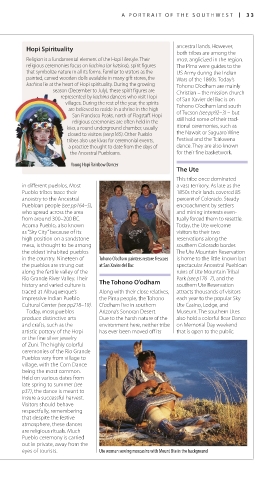
Young Hopi Rainbow Dancer
The Ute
This tribe once dominated
in different pueblos. Most a vast territory. As late as the
Pueblo tribes trace their 1850s their lands covered 85
ancestry to the Ancestral percent of Colorado. Steady
Puebloan people (see pp164–5), encroachment by settlers
who spread across the area and mining interests even
from around 300–200 BC. tually forced them to resettle.
Acoma Pueblo, also known Today, the Ute welcome
as “Sky City” because of its visitors to their two
high pos ition on a sandstone reservations along the
mesa, is thought to be among southern Colorado border.
the oldest inhabited pueblos The Ute Mountain Reservation
in the country. Nineteen of Tohono O’odham painters restore frescoes is home to the little known but
the pueblos are strung out at San Xavier del Bac spectacular Ancestral Puebloan
along the fertile valley of the ruins of Ute Mountain Tribal
Rio Grande River Valley. Their Park (see p176–7), and the
history and varied culture is The Tohono O’odham southern Ute Reservation
traced at Albuquerque’s Along with their close relatives, attracts thousands of visitors
impressive Indian Pueblo the Pima people, the Tohono each year to the popular Sky
Cultural Center (see pp218–19). O’odham live in southern Ute Casino, Lodge, and
Today, most pueblos Arizona’s Sonoran Desert. Museum. The southern Utes
produce distinctive arts Due to the harsh nature of the also hold a colorful Bear Dance
and crafts, such as the environment here, neither tribe on Memorial Day weekend
artistic pottery of the Hopi has ever been moved off its that is open to the public.
or the fine silver jewelry
of Zuni. The highly colorful
ceremonies of the Rio Grande
Pueblos vary from village to
village, with the Corn Dance
being the most common.
Held on various dates from
late spring to summer (see
p37), the dance is meant to
insure a successful harvest.
Visitors should behave
respectfully, remembering
that despite the festive
atmosphere, these dances
are religious rituals. Much
Pueblo ceremony is carried
out in private, away from the
eyes of tourists. Ute woman sewing moccasins with Mount Ute in the background
032-033_EW_SW_USA.indd 33 28/11/17 12:39 PM

