


Page 143 - (DK) Ocean - The Definitive Visual Guide
P. 143
141


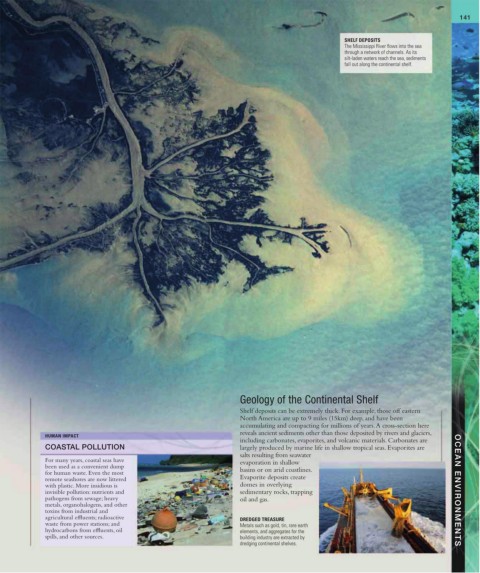
                                                                                                        SHELF DEPOSITS
                                                                                                        The Mississippi River flows into the sea
                                                                                                        through a network of channels. As its
                                                                                                        silt-laden waters reach the sea, sediments
                                                                                                        fall out along the continental shelf.


                                                                        Geology of the Continental Shelf
                                                                        Shelf deposits can be extremely thick. For example, those off eastern
                                                                        North America are up to 9 miles (15km) deep, and have been
                                                                        accumulating and compacting for millions of years. A cross-section here
                                                                        reveals ancient sediments other than those deposited by rivers and glaciers,
              HUMAN IMPACT
                                                                        including carbonates, evaporites, and volcanic materials. Carbonates are
              COASTAL POLLUTION                                         largely produced by marine life in shallow tropical seas. Evaporites are
                                                                        salts resulting from seawater
              For many years, coastal seas have                         evaporation in shallow
              been used as a convenient dump
              for human waste. Even the most                            basins or on arid coastlines.
              remote seashores are now littered                         Evaporite deposits create
              with plastic. More insidious is                           domes in overlying
              invisible pollution: nutrients and                        sedimentary rocks, trapping                                      OCEAN ENVIRONMENTS
              pathogens from sewage; heavy                              oil and gas.
              metals, organohalogens, and other
              toxins from industrial and
              agricultural effluents; radioactive                       DREDGED TREASURE
              waste from power stations; and                            Metals such as gold, tin, rare earth
              hydrocarbons from effluents, oil                          elements, and aggregates for the
              spills, and other sources.                                building industry are extracted by
                                                                        dredging continental shelves.

