


Page 147 - (DK) Ocean - The Definitive Visual Guide
P. 147
145


                                                                                                        SEA-BED STABILIZERS

                                                                                                        This sea bed owes its luxuriant
                                                                                                        growth, including hydroids, soft
                                                                                                        corals, and brittlestars, to the
                                                                                                        many Flame Shells and Horse
                                                                                                        Mussels hidden under the surface.
                                                                                                        These molluscs bind the shifting
                                                                                                        sediments with strong threads,
                                                                                                        creating a stable, complex surface
                                                                                                        that many other animals can
                                                                                                        colonize. Flame Shell nests join
                                                                                                        together to form extensive reefs,
                                                                                                        with holes for water exchange,
                                                                                                        so many other organisms can live
                                                                                                        inside and beneath the nests.


              DISCOVERY
              SEA WRECKS

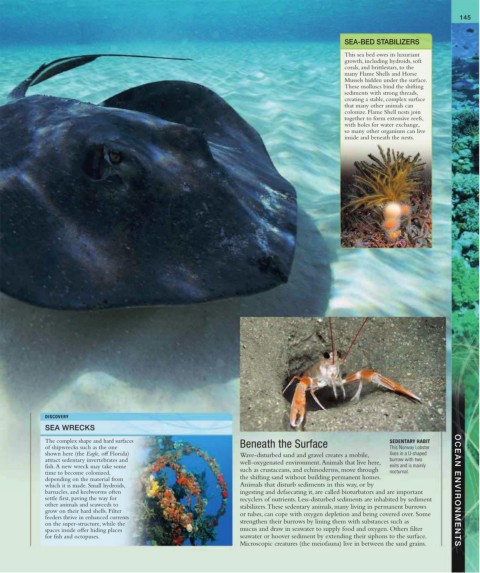
              The complex shape and hard surfaces                       Beneath the Surface                          SEDENTARY HABIT
              of shipwrecks such as the one                                                                          This Norway Lobster
              shown here (the Eagle, off Florida)                       Wave-disturbed sand and gravel creates a mobile,    lives in a U-shaped
              attract sedentary invertebrates and                       well-oxygenated environment. Animals that live here,   burrow with two
              fish. A new wreck may take some                                                                        exits and is mainly
              time to become colonized,                                 such as crustaceans, and echinoderms, move through   nocturnal.
              depending on the material from                            the shifting sand without building permanent homes.
              which it is made. Small hydroids,                         Animals that disturb sediments in this way, or by
              barnacles, and keelworms often                            ingesting and defaecating it, are called bioturbators and are important   OCEAN ENVIRONMENTS
              settle first, paving the way for                          recyclers of nutrients. Less-disturbed sediments are inhabited by sediment
              other animals and seaweeds to                             stabilizers. These sedentary animals, many living in permanent burrows
              grow on their hard shells. Filter                         or tubes, can cope with oxygen depletion and being covered over. Some
              feeders thrive in enhanced currents
              on the super-structure, while the                         strengthen their burrows by lining them with substances such as
              spaces inside offer hiding places                         mucus and draw in seawater to supply food and oxygen. Others filter
              for fish and octopuses.                                   seawater or hoover sediment by extending their siphons to the surface.
                                                                        Microscopic creatures (the meiofauna) live in between the sand grains.

