


Page 151 - (DK) Ocean - The Definitive Visual Guide
P. 151
SEAGRASS BEDS AND KELP FORESTS              149


                INDIAN OCEAN WEST
             Gazi Bay

                           COASTAL TYPE  Shallow
                           bay and fringing reef
                           WATER TYPE  Tropical
                           PRIMARY VEGETATION
                           Seagrasses and
                           mangroves
             LOCATION  30 miles (50 km) south of Mombasa, Kenya
             Gazi Bay’s shallow, subtidal mud and
             sand flats are sheltered by fringing
             coral reefs. Twelve species of seagrass
             grow on the mudflats, and these
             seagrass beds cover about half of the
             bay’s 6 square miles (15 square km).
             Mangrove-lined creeks flow into the
             bay, and this unusual proximity of
             mangrove, seagrass, and coral reef
             systems has led to scientific studies on
             how they interact. The seagrass beds
             proved to be important in trapping
             particles washed into the bay from the
             creeks. Most were trapped within 1/4
                                      1
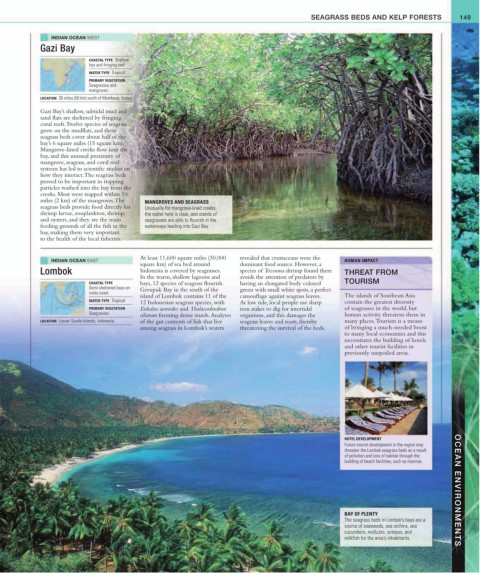
             miles (2 km) of the mangroves. The   MANGROVES AND SEAGRASS
             seagrass beds provide food directly for   Unusually for mangrove-lined creeks,
             shrimp larvae, zooplankton, shrimp,   the water here is clear, and stands of
             and oysters, and they are the main   seagrasses are able to flourish in the
             feeding grounds of all the fish in the   waterways leading into Gazi Bay.
             bay, making them very important
             to the health of the local fisheries.


                                           At least 11,600 square miles (30,000   revealed that crustaceans were the
                INDIAN OCEAN EAST                                                                       HUMAN IMPACT
                                           square km) of sea bed around   dominant food source. However, a
             Lombok                        Indonesia is covered by seagrasses.    species of Tozeuma shrimp found there   THREAT FROM
                                           In the warm, shallow lagoons and   avoids the attention of predators by
                           COASTAL TYPE     bays, 12 species of seagrass flourish.   having an elongated body colored   TOURISM
                           Semi-sheltered bays on   Gerupuk Bay in the south of the   green with small white spots, a perfect
                           rocky coast
                                           island of Lombok contains 11 of the   camouflage against seagrass leaves.    The islands of Southeast Asia
                           WATER TYPE  Tropical  12 Indonesian seagrass species, with   At low tide, local people use sharp   contain the greatest diversity
                           PRIMARY VEGETATION    Enhalus acoroides and Thalassodendron   iron stakes to dig for intertidal   of seagrasses in the world, but
                           Seagrasses      ciliatum forming dense stands. Analyses   organisms, and this damages the   human activity threatens them in
             LOCATION  Lesser Sunda Islands, Indonesia  of the gut contents of fish that live   seagrass leaves and roots, thereby   many places. Tourism is a means
                                           among seagrass in Lombok’s waters   threatening the survival of the beds.   of bringing a much-needed boost
                                                                                                        to many local economies and this
                                                                                                        necessitates the building of hotels
                                                                                                        and other tourist facilities in
                                                                                                        previously unspoiled areas.


                                                                                                        HOTEL DEVELOPMENT
                                                                                                        Future tourist development in the region may
                                                                                                        threaten the Lombok seagrass beds as a result
                                                                                                        of pollution and loss of habitat through the
                                                                                                        building of beach facilities, such as marinas.


                                                                                                        BAY OF PLENTY                    OCEAN ENVIRONMENTS
                                                                                                        The seagrass beds in Lombok’s bays are a
                                                                                                        source of seaweeds, sea urchins, sea
                                                                                                        cucumbers, mollusks, octopus, and
                                                                                                        milkfish for the area’s inhabitants.

