


Page 217 - (DK) Ocean - The Definitive Visual Guide
P. 217
215


                                                                                                        HUMAN IMPACT
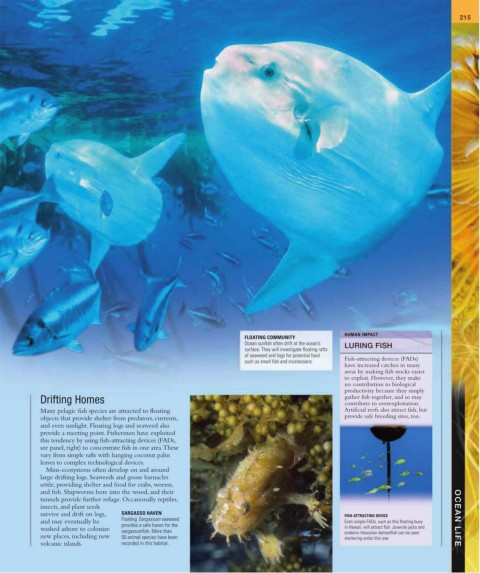
                                                                          FLOATING COMMUNITY
                                                                          Ocean sunfish often drift at the ocean’s   LURING FISH
                                                                          surface. They will investigate floating rafts
                                                                          of seaweed and logs for potential food
                                                                          such as small fish and crustaceans.   Fish-attracting devices (FADs)
                                                                                                        have increased catches in many
                                                                                                        areas by making fish stocks easier
                                                                                                        to exploit. However, they make
                                                                                                        no contribution to biological
                                                                                                        productivity because they simply
             Drifting Homes                                                                             gather fish together, and so may
                                                                                                        contribute to overexploitation.
             Many pelagic fish species are attracted to floating                                        Artificial reefs also attract fish, but
             objects that provide shelter from predators, currents,                                     provide safe breeding sites, too.
             and even sunlight. Floating logs and seaweed also
             provide a meeting point. Fishermen have exploited
             this tendency by using fish-attracting devices (FADs,
             see panel, right) to concentrate fish in one area. These
             vary from simple rafts with hanging coconut palm
             leaves to complex technological devices.
               Mini-ecosystems often develop on and around
             large drifting logs. Seaweeds and goose barnacles
             settle, providing shelter and food for crabs, worms,
             and fish. Shipworms bore into the wood, and their
             tunnels provide further refuge. Occasionally reptiles,
             insects, and plant seeds
             survive and drift on logs,   SARGASSO HAVEN                                                FISH-ATTRACTING DEVICE
             and may eventually be   Floating Sargassum seaweed                                         Even simple FADs, such as this floating buoy   OCEAN LIFE
                                     provides a safe haven for the
             washed ashore to colonize   sargassumfish. More than                                        in Hawaii, will attract fish. Juvenile jacks and
                                                                                                        endemic Hawaiian damselfish can be seen
             new places, including new   50 animal species have been                                    sheltering under this one.
             volcanic islands.       recorded in this habitat.

