


Page 145 - (DK) Home Doctor: Providing practical advice on home treatments
P. 145
COMMON CONDITIONS: PROBLEMS IN BABIES  143

         Diarrhea and vomiting (babies)


              Many babies normally have semiliquid feces, and regurgitate
                                                                            WARNING
              small amounts of milk after a feeding, but diarrhea and vomiting
              are more serious. An affected baby passes runny feces more  Seek immediate medical help if:
              frequently than normal and may vomit whole feedings. The   ● Your baby is under 3 months old
                                                                     ● Your baby has blood- or green-
              most common cause of prolonged diarrhea and vomiting is
                                                                     stained vomit; bloody or tarry
              gastroenteritis (inflammation of the stomach and intestines),  stools; sunken eyes; dry mouth and
              which mainly affects bottle-fed babies. Although it usually clears  tongue; dry diapers; or is drowsy
              up quickly, there is a risk of your baby becoming dehydrated.

              See also Feeding problems, pp.144–145.


         What you can do yourself
                                                                    DRUG REMEDIES
              There are several steps you can take to relieve
              mild diarrhea and vomiting. The main risk is  Oral rehydration solutions (see
              dehydration, so it is important to replace lost fluids.  p.188), available from your pharmacist, are designed
                                                            to replace water, sugar, and salts lost from diarrhea
              ● If you are breast-feeding, don’t stop. Offer your
                                                            and vomiting and to prevent dehydration. They are
              baby more frequent feedings. If diarrhea worsens,  available as ready-to-use bottled solutions and come
              give your baby an oral rehydration preparation  in several different flavors. Use the solution within
              after each feeding (see DRUG REMEDIES, right).  48 hours of opening.
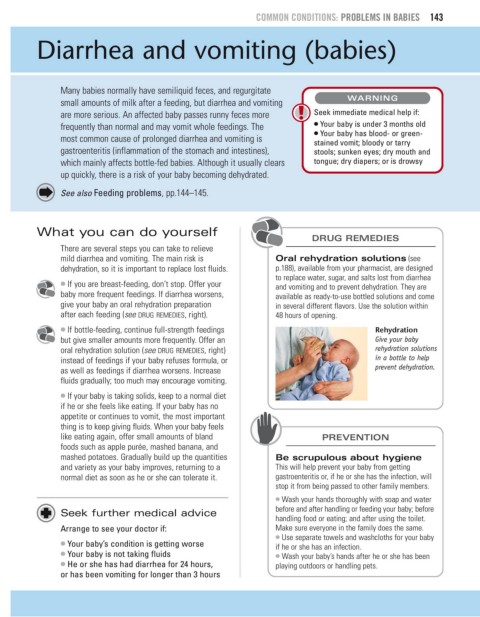
              ● If bottle-feeding, continue full-strength feedings                Rehydration
              but give smaller amounts more frequently. Offer an                  Give your baby
              oral rehydration solution (see DRUG REMEDIES, right)                rehydration solutions
              instead of feedings if your baby refuses formula, or                in a bottle to help
              as well as feedings if diarrhea worsens. Increase                   prevent dehydration.
              fluids gradually; too much may encourage vomiting.
              ● If your baby is taking solids, keep to a normal diet
              if he or she feels like eating. If your baby has no
              appetite or continues to vomit, the most important
              thing is to keep giving fluids. When your baby feels
              like eating again, offer small amounts of bland          PREVENTION
              foods such as apple purée, mashed banana, and
              mashed potatoes. Gradually build up the quantities  Be scrupulous about hygiene
              and variety as your baby improves, returning to a  This will help prevent your baby from getting
              normal diet as soon as he or she can tolerate it.  gastroenteritis or, if he or she has the infection, will
                                                            stop it from being passed to other family members.
                                                            ● Wash your hands thoroughly with soap and water
                                                            before and after handling or feeding your baby; before
              Seek further medical advice
                                                            handling food or eating; and after using the toilet.
              Arrange to see your doctor if:                Make sure everyone in the family does the same.
                                                            ● Use separate towels and washcloths for your baby
              ● Your baby’s condition is getting worse
                                                            if he or she has an infection.
              ● Your baby is not taking fluids              ● Wash your baby’s hands after he or she has been
              ● He or she has had diarrhea for 24 hours,    playing outdoors or handling pets.
              or has been vomiting for longer than 3 hours

