


Page 112 - (DK Eyewitness) Travel Guide - Rome
P. 112
110 ROME AREA B Y AREA
9 Gesù
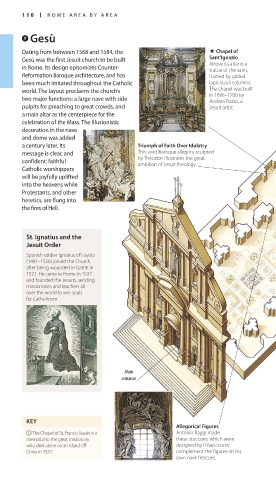
Dating from between 1568 and 1584, the . Chapel of
Gesù was the first Jesuit church to be built Sant’Ignazio
Above its altar is a
in Rome. Its design epitomizes Counter- statue of the saint,
Reformation Baroque architecture, and has framed by gilded
been much imitated throughout the Catholic lapis lazuli columns.
world. The layout proclaims the church’s The chapel was built
in 1696–1700 by
two major functions: a large nave with side Andrea Pozzo, a
pulpits for preaching to great crowds, and Jesuit artist.
a main altar as the centerpiece for the
celebration of the Mass. The illusionistic
decoration in the nave
and dome was added
a century later. Its Triumph of Faith Over Idolatry
message is clear, and This vivid Baroque allegory sculpted
confident: faithful by Théudon illustrates the great
ambition of Jesuit theology.
Catholic worshippers
will be joyfully uplifted
into the heavens while
Protestants, and other
heretics, are flung into
the fires of Hell.
St. Ignatius and the
Jesuit Order
Spanish soldier Ignatius of Loyola
(1491–1556) joined the Church
after being wounded in battle in
1521. He came to Rome in 1537
and founded the Jesuits, sending
missionaries and teachers all
over the world to win souls
for Catholicism.
Main
entrance
KEY
Allegorical Figures
1 The Chapel of St. Francis Xavier is a Antonio Raggi made
memorial to the great missionary these stuccoes, which were
who died alone on an island off designed by Il Baciccia to
China in 1552. complement the figures on his
own nave frescoes.
US_110-111_EW_Rome_US.indd 110 15/03/17 4:20 pm
Eyewitness Travel LAYERS PRINTED:
Starsight template “UK” LAYER
(Source v2)
Date 3rd September 2012
Size 125mm x 217mm

