


Page 27 - BBC Wildlife Volume 36 #06
P. 27
WATER VOLES


              SNOW POSTPONED OUR VISIT

            BUT IT DOESN’T TROUBLE THE
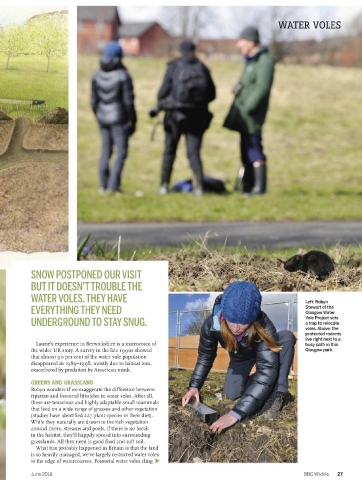
            WATER VOLES. THEY HAVE                                                                      Left: Robyn
            EVERYTHING THEY NEED                                                                        Stewart of the
                                                                                                        Glasgow Water
            UNDERGROUND TO STAY SNUG.                                                                   Vole Project sets
                                                                                                        a trap to relocate
                                                                                                        voles.Above: the
                                                                                                        protected rodents
                                                                                                        live right next to a
             Laurie’s experience in Berwickshire is a microcosm of                                      busy path in this
            the wider UK story. A survey in the late 1990s showed                                       Glasgow park.
            that almost 90 per cent of the water vole population
            disappeared in 1989–1998, mostly due to habitat loss,
            exacerbated by predation by American mink.
            GREENS AND GRASSLAND
            Robyn wonders if we exaggerate the difference between
            riparian and fossorial lifestyles in water voles. After all,
            these are tenacious and highly adaptable small mammals
            that feed on a wide range of grasses and other vegetation
            (studies have identified 227 plant species in their diet).
            While they naturally are drawn to the rich vegetation
            around rivers, streams and pools, if there is no break
            in the habitat, they’ll happily spread into surrounding
            grasslands. All they need is good food and soft soil.
             What has probably happened in Britain is that the land
            is so heavily managed, we’ve largely restricted water voles
            to the edge of watercourses. Fossorial water voles cling

            June 2018                                                                                   BBC Wildlife  27

