


Page 30 - BBC Wildlife Volume 36 #06
P. 30
A wild


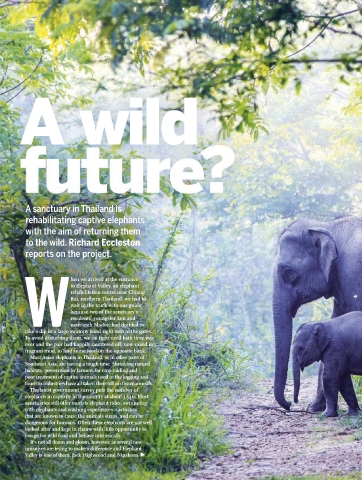
          A sanctuary in Thailand is

          rehabilitating captive elephants
          with the aim of returning them
          to the wild. Richard Eccleston

          reports on the project.


                         hen we arrived at the entrance
                         to Elephant Valley, an elephant
                         rehabilitation centre near Chiang
                         Rai, northern Thailand, we had to
                         wait in the truck with our guide
                         because two of the sanctuary’s
                         residents, youngster Lou and
         Wmatriarch Modee, had decided to
          take a dip in a large swampy pond right next to the gates.
          To avoid disturbing them, we sat tight until bath time was
          over and the pair had happily sauntered off, now caked in
          fragrant mud, to find some food on the opposite bank.
           Most Asian elephants in Thailand, as in other parts of
          Southeast Asia, are having a tough time. Shrinking natural
          habitats, persecution by farmers for crop raiding and
          poor treatment of captive animals used in the logging and
          tourism industries have all taken their toll on the mammals.
           The latest government survey puts the number of
          elephants in captivity in the country at about 3,346. Most
          sanctuaries still offer tourists elephant rides, swimming
          with elephants and washing experiences – activities
          that are known to cause the animals stress, and can be
          dangerous for humans. Often these elephants are not well
          looked after and kept in chains with little opportunity to
          forage for wild food and behave intrinsically.
           It’s not all doom and gloom, however, as several new
          initiatives are trying to make a difference and Elephant
          Valley is one of them. Jack Highwood and Nipakorn

