


Page 71 - How It Works - Book Of Amazing Answers To Curious Questions, Volume 05-15
P. 71
Science


            Why does popping


            candy pop?


            Discover the science behind this
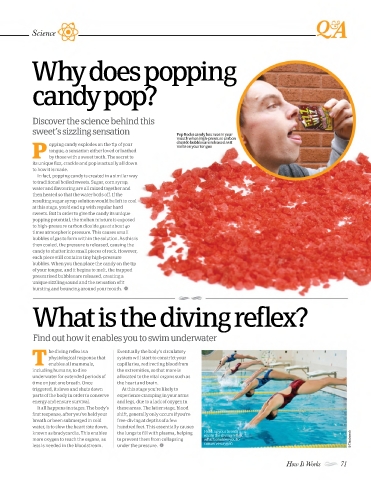
            sweet’s sizzling sensation                         Pop Rocks candy bounces in your
                                                               mouth when high-pressure carbon
                                                               dioxide bubbles are released as it
                  opping candy explodes on the tip of your
                                                               melts on your tongue
                  tongue, a sensation either loved or loathed
            P by those with a sweet tooth. The secret to
            its unique fizz, crackle and pop is actually all down
            to how it is made.
              In fact, popping candy is created in a similar way
            to traditional boiled sweets. Sugar, corn syrup,
            water and flavouring are all mixed together and
            then heated so that the water boils off. If the
            resulting sugar syrup solution would be left to cool
            at this stage, you’d end up with regular hard
            sweets. But in order to give the candy its unique
            popping potential, the molten mixture is exposed
            to high-pressure carbon dioxide gas at about 40
            times atmospheric pressure. This causes small
            bubbles of gas to form within the solution. As this is
            then cooled, the pressure is released, causing the
            candy to shatter into small pieces of rock. However,
            each piece still contains tiny high-pressure
            bubbles. When you then place the candy on the tip
            of your tongue, and it begins to melt, the trapped
            pressurised bubbles are released, creating a
            unique sizzling sound and the sensation of it
            bursting and bouncing around your mouth.


             What is the diving reflex?


             Find out how it enables you to swim underwater


                  he diving reflex is a    Eventually the body’s circulatory
                  physiological response that   system will start to constrict your
            T enables all mammals,        capillaries, redirecting blood from
            including humans, to dive     the extremities, so that more is
            underwater for extended periods of   allocated to the vital organs such as
            time on just one breath. Once   the heart and brain.
            triggered, it slows and shuts down   At this stage you’re likely to
            parts of the body in order to conserve   experience cramping in your arms
            energy and ensure survival.   and legs, due to a lack of oxygen in
              It all happens in stages. The body’s   these areas. The latter stage, blood
            first response, after you’ve held your   shift, generally only occurs if you’re
            breath or been submerged in cold   free-diving at depths of a few
            water, is to slow the heart rate down,   hundred feet. This essentially causes
            known as bradycardia. This enables   the lungs to fill with plasma, helping   Holding your breath
                                                                         elicits the diving reflex,
            more oxygen to reach the organs, as   to prevent them from collapsing   which enables you to                    © Thinkstock
                                                                         conserve oxygen
            less is needed in the bloodstream.   under the pressure.

                                                                                                      How It Works        71

