


Page 15 - Complete Birds of Britain and Europe (DK - RSPB)
P. 15
LIFE CYCLE

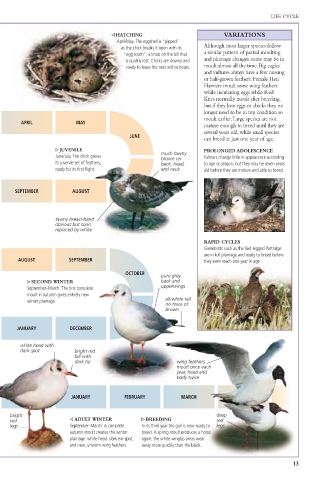
                             1  HATCHING                 VARIATIONS
                              April/May. The eggshell is “pipped”
                                                    Although most larger species follow
                               as the chick breaks it open with its
                                                    a similar pattern of partial moulting
                                “egg tooth”, a knob on the bill that
                                                    and plumage changes,some may be in
                                is quickly lost. Chicks are downy and
                                                    moult almost all the time.Big eagles
                                ready to leave the nest within hours.
                                                    and vultures always have a few missing
                                                    or half-grown feathers.Female Hen
                                                    Harriers moult some wing feathers
                                                    while incubating eggs while Red
                                                    Kites normally moult after breeding,
                                                    but if they lose eggs or chicks they no
                                                    longer need to be in top condition so
                                                    moult earlier.Large species are not
      APRIL         MAY
                                                    mature enough to breed until they are
                                                    several years old,while small species
                                 JUNE
                                                    can breed at just one year of age.
                JUVENILE                            PROLONGED ADOLESCENCE
               1
               June/July. The chick grows   much tawny  Fulmars change little in appearance according
                                         brown on
               its juvenile set of feathers,  back, head,  to age or season, but they may be seven years
               ready for its first flight.  and neck  old before they are mature and able to breed.
     SEPTEMBER     AUGUST
               tawny breast-band
               obvious but soon
               replaced by white
                                                    RAPID CYCLES
                                                    Gamebirds such as the Red-legged Partridge
                                                    are in full plumage and ready to breed before
      AUGUST      SEPTEMBER                         they even reach one year in age.
                                OCTOBER
                                         pure grey
         SECOND WINTER                   back and
                                         upperwings
        1
        September–March. The first complete
        moult in autumn gives entirely new
                                          all-white tail,
        winter plumage.
                                          no trace of
                                          brown
     JANUARY      DECEMBER
      white head with
      dark spot     bright red
                    bill with
                    dark tip                 wing feathers
                                             moult once each
                                             year, head and
                                             body twice
                   JANUARY      FEBRUARY      MARCH

    bright                                             deep
    red            1  ADULT WINTER  1 BREEDING         red
    legs          September–March. A complete  In its third year the gull is now ready to  legs
                  autumn moult creates the winter  breed. A spring moult produces a hood
                  plumage: white head, dark ear-spot,  again; the white wingtip areas wear
                  and new, unworn wing feathers.  away more quickly than the black.

                                                                          13

