


Page 54 - Complete Birds of Britain and Europe (DK - RSPB)
P. 54
INTRODUCTION

        CONSERVATION

           onservation is simply wise management, which aims to
        Cmaintain or enhance the numbers and variety of wild
        species and the habitats on which they depend.The birdlife
        in most parts of Europe has undergone dramatic changes
        almost everywhere over several centuries: little of Europe is
        now “natural”, apart from the far north, some forests,
        mountains, and seas. It is therefore difficult to say that the
        present birdlife is “as it should be”, and that all change must
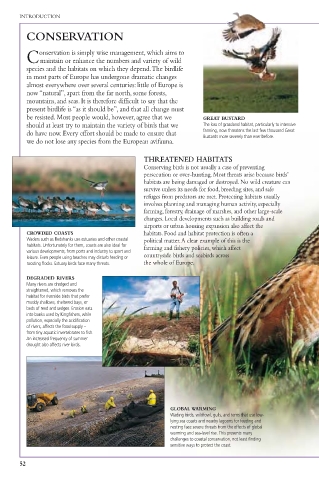
        be resisted. Most people would, however, agree that we  GREAT BUSTARD
        should at least try to maintain the variety of birds that we   The loss of grassland habitat, particularly to intensive
                                                   farming, now threatens the last few thousand Great
        do have now. Every effort should be made to ensure that
                                                   Bustards more severely than ever before.
        we do not lose any species from the European avifauna.
                                     THREATENED HABITATS
                                     Conserving birds is not usually a case of preventing
                                     persecution or over-hunting. Most threats arise because birds’
                                     habitats are being damaged or destroyed. No wild creature can
                                     survive unless its needs for food, breeding sites, and safe
                                     refuges from predators are met. Protecting habitats usually
                                     involves planning and managing human activity, especially
                                     farming, forestry, drainage of marshes, and other large-scale
                                     changes. Local developments such as building roads and
                                     airports or urban housing expansion also affect the
        CROWDED COASTS               habitats. Food and habitat protection is often a
        Waders such as Redshanks use estuaries and other coastal  political matter.A clear example of this is the
        habitats. Unfortunately for them, coasts are also ideal for  farming and fishery policies, which affect
        various developments, from ports and industry to sport and
        leisure. Even people using beaches may disturb feeding or  countryside birds and seabirds across
        roosting flocks. Estuary birds face many threats.  the whole of Europe.
        DEGRADED RIVERS
        Many rivers are dredged and
        straightened, which removes the
        habitat for riverside birds that prefer
        muddy shallows, sheltered bays, or
        beds of reed and sedges. Erosion eats
        into banks used by Kingfishers, while
        pollution, especially the acidification
        of rivers, affects the food supply –
        from tiny aquatic invertebrates to fish.
        An increased frequency of summer
        drought also affects river birds.


                                           GLOBAL WARMING
                                           Wading birds, wildfowl, gulls, and terns that use low-
                                           lying sea coasts and nearby lagoons for feeding and
                                           nesting face severe threats from the effects of global
                                           warming and sea-level rise. This presents many
                                           challenges to coastal conservation, not least finding
                                           sensitive ways to protect the coast.

      52

