


Page 91 - Complete Birds of Britain and Europe (DK - RSPB)
P. 91
WILDFOWL
        Family Anatidae
        WILDFOWL

           HIS LARGE GROUP OF water birds splits
        Tinto clear groups, with a few “in between”
        species.They have webbed feet, rather short but
        specialized bills, and swim well, although many
        spend much of their time on dry land.

        DUCKS
        The two main groups are surface feeders (or
        dabbling ducks) and diving ducks.The former
        feed on land or from the water surface (sieving
        food through their bills, gleaning grain, plucking
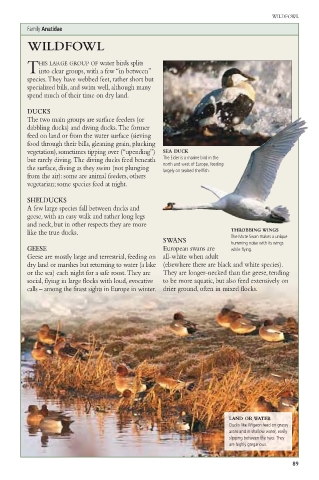
        vegetation),sometimes tipping over (“upending”)  SEA DUCK
        but rarely diving.The diving ducks feed beneath  The Eider is a marine bird in the
                                          north and west of Europe, feeding
        the surface, diving as they swim (not plunging  largely on seabed shellfish.
        from the air): some are animal feeders, others
        vegetarian; some species feed at night.

        SHELDUCKS
        A few large species fall between ducks and
        geese, with an easy walk and rather long legs
        and neck, but in other respects they are more
        like the true ducks.                              THROBBING WINGS
                                                          The Mute Swan makes a unique
                                          SWANS           humming noise with its wings
        GEESE                             European swans are  while flying.
        Geese are mostly large and terrestrial, feeding on all-white when adult
        dry land or marshes but returning to water (a lake (elsewhere there are black and white species).
        or the sea) each night for a safe roost.They are  They are longer-necked than the geese, tending
        social, flying in large flocks with loud, evocative  to be more aquatic, but also feed extensively on
        calls – among the finest sights in Europe in winter. drier ground, often in mixed flocks.


                                                          LAND OR WATER
                                                          Ducks like Wigeon feed on grassy
                                                          areas and in shallow water, easily
                                                          slipping between the two. They
                                                          are highly gregarious.

                                                                          89

