


Page 30 - (DK Eyewitness) Travel Guide - Spain
P. 30
28 INTRODUCING SP AIN
Architecture in Spain
Spain has always imported its styles of architecture: Moorish
from North Africa, Romanesque and Gothic from France and
Renaissance from Italy. Each style, however, was interpreted in
a distinctively Spanish way, with sudden and strong contrasts
between light and shady areas; façades alternating between
austerity and extravagant decoration; and thick walls
pierced by few windows to lessen the impact of heat and
sunlight. Styles vary from region to region, reflecting the
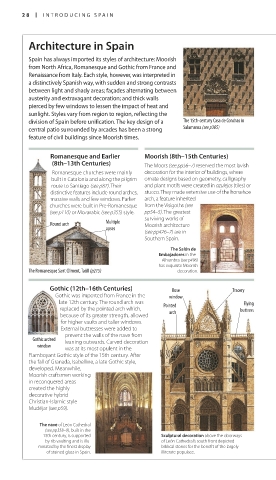
division of Spain before unification. The key design of a The 15th-century Casa de Conchas in
central patio surrounded by arcades has been a strong Salamanca (see p365)
feature of civil buildings since Moorish times.
Romanesque and Earlier Moorish (8th–15th Centuries)
(8th–13th Centuries) The Moors (see pp56–7) reserved the most lavish
Romanesque churches were mainly decoration for the interior of buildings, where
built in Catalonia and along the pilgrim ornate designs based on geometry, calligraphy
route to Santiago (see p87). Their and plant motifs were created in azulejos (tiles) or
distinctive features include round arches, stucco. They made extensive use of the horsehoe
massive walls and few windows. Earlier arch, a feature inherited
churches were built in Pre-Romanesque from the Visigoths (see
(see p110) or Mozarabic (see p355) style. pp54–5). The greatest
surviving works of
Round arch Multiple Moorish architecture
apses
(see pp426–7) are in
Southern Spain.
The Salón de
Embajadores in the
Alhambra (see p496)
has exquisite Moorish
The Romanesque Sant Climent, Taüll (p215) decoration.
Gothic (12th–16th Centuries) Rose Tracery
Gothic was imported from France in the window
late 12th century. The round arch was Flying
replaced by the pointed arch which, Pointed buttress
arch
because of its greater strength, allowed
for higher vaults and taller windows.
External buttresses were added to
prevent the walls of the nave from
Gothic arched leaning outwards. Carved decoration
window
was at its most opulent in the
Flam boyant Gothic style of the 15th century. After
the fall of Granada, Isabelline, a late Gothic style,
developed. Meanwhile,
Moorish craftsmen working
in reconquered areas
created the highly
decorative hybrid
Christian-Islamic style
Mudéjar (see p59).
The nave of León Cathedral
(see pp358–9), built in the
13th century, is supported Sculptural decoration above the doorways
by rib vaulting and is illu- of León Cathedral’s south front depicted
minated by the finest display biblical stories for the benefit of the largely
of stained glass in Spain. illiterate populace.
028-029_EW_Spain.indd 28 26/09/17 11:00 am

