


Page 34 - (DK Eyewitness) Travel Guide - Spain
P. 34
32 INTRODUCING SP AIN
Farming in Spain
Spain’s varied geography and climate have created
a mosaic of farming patterns ranging from lush
dairylands to stony hillsides where goats graze.
Land can be broadly divided into secano, or dry
cultivation (used for olives, wheat and vines),
and much smaller areas of regadío, irrigated land
(planted with citrus trees, rice and vegetables).
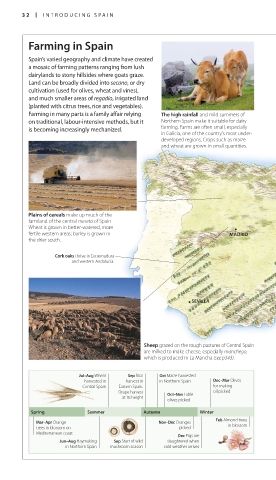
Farming in many parts is a family affair relying The high rainfall and mild summers of
on traditional, labour-intensive methods, but it Northern Spain make it suitable for dairy
is becoming increasingly mechanized. farming. Farms are often small, especially
in Galicia, one of the country’s most under-
developed regions. Crops such as maize
and wheat are grown in small quantities.
Plains of cereals make up much of the
farmland of the central meseta of Spain.
Wheat is grown in better-watered, more
fertile western areas; barley is grown in MADRID
the drier south.
Cork oaks thrive in Extremadura
and western Andalucía.
SEVILLA
Sheep grazed on the rough pastures of Central Spain
are milked to make cheese, especially manchego,
which is produced in La Mancha (see p343).
Jul–Aug Wheat Sep Rice Oct Maize harvested
harvested in harvest in in Northern Spain Dec–Mar Olives
Central Spain Eastern Spain. for making
Grape harvest Oct–Nov Table oil picked
at its height
olives picked
Spring Summer Autumn Winter
Feb Almond trees
Mar–Apr Orange Nov–Dec Oranges
trees in blossom on picked in blossom
Mediterranean coast
Dec Pigs are
Jun–Aug Haymaking Sep Start of wild slaughtered when
in Northern Spain mushroom season cold weather arrives
032-033_EW_Spain.indd 32 26/09/17 11:52 am

