


Page 301 - (DK) Smithsinian - Military History: The Definitive Visual Guide to the Objects of Warfare
P. 301
299

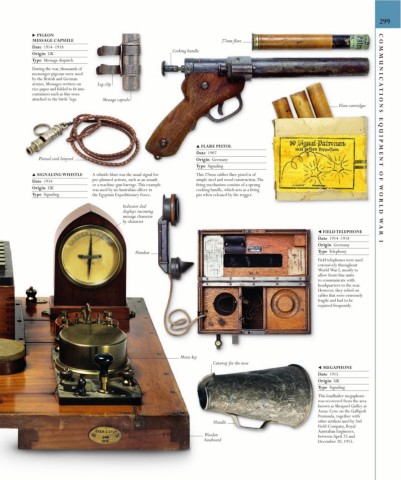
            ▶ PIGEON
            MESSAGE CAPSULE                                                     27mm flare
            Date  1914–1918
                                                              Cocking handle
            Origin  UK
            Type  Message dispatch                                                                                                      COMMUNICA
            During the war, thousands of
            messenger pigeons were used
            by the British and German
            armies. Messages written on   Leg clip
            rice paper and folded to fit into
            containers such as this were
            attached to the birds’ legs.  Message capsule
                                                                                                                          Flare cartridges  TIONS EQ


                                                                       ▲ FLARE PISTOL
                                                                       Date  1907
               Plaited cord lanyard                                    Origin  Germany                                                  UIPMENT OF  W
                                                                       Type  Signaling
            ▲ SIGNALING WHISTLE   A whistle-blast was the usual signal for   This 27mm caliber flare pistol is of
            Date  1914            pre-planned actions, such as an assault   simple steel and wood construction. The
                                  or a machine-gun barrage. This example   firing mechanism consists of a sprung
            Origin  UK            was used by an Australian officer in    cocking handle, which acts as a firing
            Type  Signaling       the Egyptian Expeditionary Force.    pin when released by the trigger.
                                             Indicator dial                                                                             ORLD  W
                                             displays incoming
                                             message character
                                             by character
                                                                                                                  ◀ FIELD TELEPHONE     AR I
                                                                                                                  Date  1914–1918
                                                                                                                  Origin  Germany
                                                 Handset                                                          Type  Telephony
                                                                                                                  Field telephones were used
                                                                                                                  extensively throughout
                                                                                                                  World  War I, mostly to
                                                                                                                  allow front-line units
                                                                                                                  to communicate with
                                                                                                                  headquarters to the rear.
                                                                                                                  However, they relied on
                                                                                                                  cables that were extremely
                                                                                                                  fragile and had to be
                                                                                                                  repaired frequently.


                                                                 Morse key
                                                                             Cutaway for the nose
                                                                                                                  ◀ MEGAPHONE
                                                                                                                  Date  1915
                                                                                                                  Origin  UK
                                                                                                                  Type  Signaling
                                                                                                                  This loudhailer megaphone
                                                                                                                  was recovered from the area
                                                                                                                  known as Shrapnel Gulley at
                                                                                                                  Anzac Cove on the Gallipoli
                                                                                                                  Peninsula, together with
                                                                             Handle                               other artifacts used by 2nd
                                                                                                                  Field Company, Royal
                                                                                                                  Australian Engineers,
                                                                          Wooden                                  between April 25 and
                                                                          baseboard                               December 20, 1915.

