


Page 315 - (DK) Smithsinian - Military History: The Definitive Visual Guide to the Objects of Warfare
P. 315
313

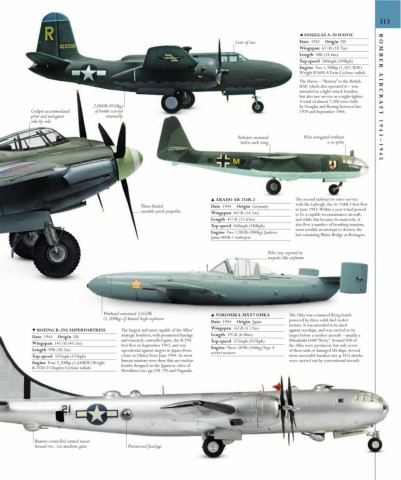
                                                                                                            ◀ DOUGLAS A-20 HAVOC
                                                                                     Crew of two            Date  1942     Origin  US
                                                                                                            Wingspan  61 ⁄3ft (18.7m)
                                                                                                                     1
                                                                                                            Length  48ft (14.6m)
                                                                                                            Top speed  340mph (549kph)
                                                                                                            Engine  Two 1,700hp (1,267.7kW)
                                                                                                            Wright R2600-A Twin Cyclone radials  BOMBER AIRCRAFT
                                                                                                            The Havoc—“Boston” to the British
                                                                                                            RAF, which also operated it—was
                                                                                                            intended as a light/attack bomber,
                                                                                                            but also saw service as a night-fighter.
                                                                                                            A total of almost 7,500 were built
                                  2,000lb (910kg)                                                           by Douglas and Boeing between late
            Cockpit accommodated    of bombs carried                                                        1939 and September 1944.
            pilot and navigator        internally
            side-by-side


                                                                                      Turbojets mounted      Pilot navigated without
                                                                                       below each wing                a co-pilot        1943–1945


                                                                            ▲ ARADO AR 234B-2             The second turbojet to enter service
                                                                                                          with the Luftwaffe, the Ar 234B-2 first flew
                                                   Three-bladed             Date  1944     Origin  Germany
                                                   variable-pitch propeller  Wingspan  46 ⁄4ft (14.1m)    in June 1943. Within a year it had proved
                                                                                      1
                                                                                                          to be a capable reconnaissance aircraft,
                                                                                    1
                                                                            Length  41 ⁄2ft (12.63m)      and while this became its main role, it
                                                                            Top speed  460mph (740kph)    also flew a number of bombing missions,
                                                                                                          most notably an attempt to destroy the
                                                                            Engine  Two 1,985lb (900kg) Junkers   last remaining Rhine Bridge at Remagen.
                                                                            Jumo 004B-1 turbojets
                                                                                                Pilot very exposed in
                                                                                                torpedo-like airframe


                                      Warhead contained 2,650lb             ▲ YOKOSUKA MXY7 OHKA        The Ohka was a manned flying bomb
                                      (1,200kg) of Amatol high explosive                                powered by three solid-fuel rocket
                                                                            Date  1944     Origin  Japan
                                                                                                        motors. It was intended to be used
                                                                                      3
            ▼ BOEING B-29A SUPERFORTRESS    The largest and most capable of the Allies’   Wingspan  16 ⁄4ft (5.12m)  against warships, and was carried to its
                                                                                    3
            Date  1944     Origin  US       strategic bombers, with pressurized fuselage   Length  19 ⁄4ft (6.06m)  target below a mother-aircraft—usually a
                                            and remotely controlled guns, the B-29A   Top speed  575mph (927kph)  Mitsubishi G4M “Betty.”  Around 850 of
                       1
            Wingspan  141 ⁄4ft (43.1m)      first flew in September 1942, and was                       the Ohka were produced, but only seven
            Length  99ft (30.2m)            operational against targets in Japan (from    Engine  Three 587lb (266kg) Type 4   of them sank or damaged US ships. Several
                                                                            rocket motors
            Top speed  357mph (575kph)      a base in China) from June 1944. Its most                   more successful kamikaze (see p.342) attacks
                                            famous missions were those that saw nuclear                 were carried out by conventional aircraft.
            Engine  Four 2,200hp (1,640kW) Wright
            R-3350-23 Duplex Cyclone radials  bombs dropped on the Japanese cities of
                                            Hiroshima (see pp.378–79) and Nagasaki.


             Remote-controlled ventral turret
             housed two .5in machine-guns      Pressurized fuselage

