


Page 323 - (DK) Smithsinian - Military History: The Definitive Visual Guide to the Objects of Warfare
P. 323
321


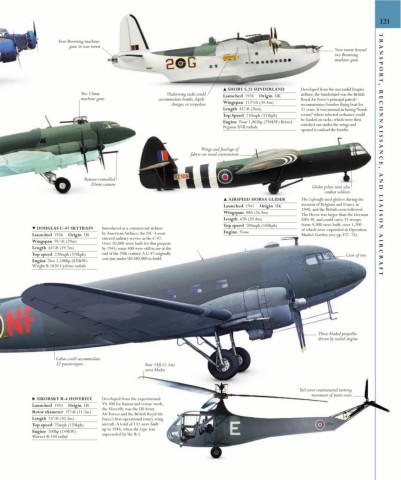
                      Four Browning machine-
                          guns in rear turret
                                                                                                                        Nose turret housed
                                                                                                                        two Browning    TRANSPOR
                                                                                                                        machine-guns


                                                                                                                                        ,
                                                                                 ▲ SHORT S.25 SUNDERLAND    Developed from the successful Empire   T
                              Two 13mm                      Underwing racks could   Launched  1938     Origin  UK  airliner, the Sunderland was the British
                              machine-guns                accommodate bombs, depth-                         Royal Air Force’s principal patrol/
                                                              charges, or torpedoes   Wingspan  112¾ft (34.4m)  reconnaissance bomber flying boat for
                                                                                 Length  85 ⁄3ft (26m)      21 years. It was unusual in having “bomb
                                                                                        1
                                                                                 Top Speed  210mph (335kph)  rooms” where selected ordnance could
                                                                                                            be loaded on racks, which were then
                                                                                 Engine  Four 1,065hp (794kW) Bristol
                                                                                 Pegasus XVII radials       winched out under the wings and    RECONNAISSANCE,
                                                                                                            opened to unload the bombs.

                                                                         Wings and fuselage of
                                                                     fabric-on-wood construction


                               Remote-controlled
                                 20mm cannon
                                                                                                                Glider pilots were also
                                                                                                                     combat soldiers
                                                                                 ▲ AIRSPEED HORSA GLIDER    The Luftwaffe used gliders during the
                                                                                 Launched  1941     Origin  UK  invasion of Belgium and France in   AND LIAISON
                                                                                                            1940, and the British soon followed.
                                                                                 Wingspan  88ft (26.8m)     The Horsa was larger than the German
                                                                                 Length  67ft (20.4m)       DFS 30, and could carry 25 troops.
                                                                                 Top speed  100mph (160kph)  Some 4,000 were built, over 1,200
            ▼ DOUGLAS C-47 SKYTRAIN  Introduced as a commercial airliner         Engine  None               of which were expended in Operation
            Launched  1936     Origin  US  by American Airlines, the DC-3 soon                              Market Garden (see pp.372–73).
                                     entered military service as the C-47.
                      1
            Wingspan  95 ⁄4ft (29m)
                                     Over 10,000 were built for this purpose
                    3
            Length  64 ⁄4ft (19.7m)  by 1945; some 400 were still in use at the
            Top speed  230mph (370kph)  end of the 20th century. A C-47 originally                                          Crew of two  AIRCRAFT
                                     cost just under US $80,000 to build.
            Engine  Two 1,100hp (820kW)
            Wright R-1820 Cyclone radials


                                                                                                                  Three-bladed propeller
                                                                                                                  driven by radial engine


                     Cabin could accommodate
                     32 paratroopers                 Four 18ft (5.5m)
                                                     rotor blades


                                                                                                            Tail rotor counteracted turning
                                                                                                                movement of main rotor
            ▶ SIKORSKY R-4 HOVERFLY  Developed from the experimental
            Launched  1943     Origin  US  VS-300 for liaison and rescue work,
                                     the Hoverfly was the US Army
                          3
            Rotor diameter  37 ⁄4ft (11.5m)
                                     Air Forces and the British Royal Air
            Length  33 ⁄2ft (10.2m)  Force’s first operational rotary-wing
                    1
            Top speed  75mph (120kph)  aircraft. A total of 131 were built
                                     up to 1944, when the type was
            Engine  200hp (149kW)
            Warner R-550 radial      superseded by the R-5.

