


Page 27 - (DK Eyewitness) Travel Guide: Japan
P. 27
A POR TR AIT OF JAP AN 25
recent reforms, enacted in 2014, was screen painting and ukiyo-e
to raise consumption tax for the first wood-block prints of the Edo era.
time in 17 years. Elevated from 5 to Visits by geisha and their
8 percent, this bill was aimed patrons to discreet hot springs
to cover rising social welfare in the alps are the material for
costs linked to Japan’s some atmos pheric novels
ageing population. by writers such as the Nobel
laureate Kawabata Yasunari
Leisure and the Art (1899–1972).
of Living Nature and aesthetics
The Japanese take their fuse in the national
sports and leisure appreciation for
activities almost as cherry blossoms,
seriously as their a passion that
work. Traditional Baseball, a popular sport in Japan both charms and
sports, in par ticular, perplexes the visitor.
often embody some underlying cultural, Hanami (cherry blossom) parties are held
spiritual, or aesthetic principle, so that throughout the country. Because com-
there is not only the method but “the petition for the best viewing sites can be
way.” This applies especially to ancient fierce, company bosses often send their
disciplines like kyudo (archery), kendo, younger scions ahead to claim a good
karate, and aikido. Sumo, the national patch under the trees. The cherry, as
sport of Japan, originated as an oracular the Japanese see it, is a felicitous symbol
ritual linked to but also a poignant reminder of the
prayers for a evanescent beauty of this floating world.
bountiful Few nations have extracted so much
harvest. Having refined pleasure and sadness from the
a similar appeal contemplation of a flower.
to sports The Japanese hunger for innovation
audiences as and advancement has not devoured their
Kabuki dramas spiritual heritage or the natural grace
Sumo wrestlers at the start of a bout do to theater- extended toward visitors. Most travelers
goers, sumo return home with the impression, in
ranks many non-Japanese among its fans. fact, of an unfailingly generous and
Japan gained many soccer fans after the hospitable people, for whom politeness
creation of the J-League in 1993 and its and consideration toward a guest are
selection, along with Korea, as co- host for second nature.
the 2002 World Cup. Interest in the sport
continues to grow on the back of such
successes as Nadeshiko Japan, Japan’s
women’s team, becoming the first Asian
team to win the FIFA Women’s World Cup
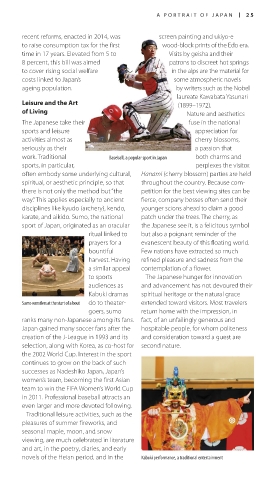
in 2011. Professional baseball attracts an
even larger and more devoted following.
Traditional leisure activities, such as the
pleasures of summer fireworks, and
seasonal maple, moon, and snow
viewing, are much celebrated in literature
and art, in the poetry, diaries, and early
novels of the Heian period, and in the Kabuki performance, a traditional entertainment
020-025_EW_Japan.indd 25 08/08/16 2:53 pm

