


Page 154 - First Aid for the USMLE Step 1 2020, Thirtieth edition [MedicalBooksVN.com]_Neat
P. 154
110         SECTIon II    Immunology  ` Immunology—Immune reSponSeS                                                                                             Immunology  ` Immunology—Immune reSponSeS


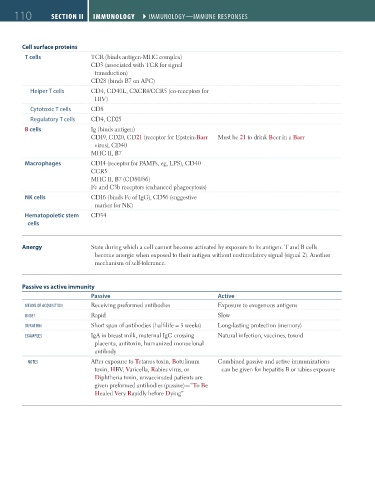
               Cell surface proteins
                T cells              TCR (binds antigen-MHC complex)
                                     CD3 (associated with TCR for signal
                                       transduction)
                                     CD28 (binds B7 on APC)
                 Helper T cells      CD4, CD40L, CXCR4/CCR5 (co-receptors for
                                      HIV)
                 Cytotoxic T cells   CD8
                 Regulatory T cells  CD4, CD25
                B cells              Ig (binds antigen)
                                     CD19, CD20, CD21 (receptor for Epstein-Barr   Must be 21 to drink Beer in a Barr
                                       virus), CD40
                                     MHC II, B7

                Macrophages          CD14 (receptor for PAMPs, eg, LPS), CD40
                                     CCR5
                                     MHC II, B7 (CD80/86)
                                     Fc and C3b receptors (enhanced phagocytosis)
                NK cells             CD16 (binds Fc of IgG), CD56 (suggestive
                                       marker for NK)
                Hematopoietic stem   CD34
                 cells


               Anergy                State during which a cell cannot become activated by exposure to its antigen. T and B cells
                                       become anergic when exposed to their antigen without costimulatory signal (signal 2). Another
                                       mechanism of self-tolerance.


               Passive vs active immunity
                                     Passive                                   Active
                meanS oF acQuISItIon  Receiving preformed antibodies           Exposure to exogenous antigens
                onSet                Rapid                                     Slow
                duratIon             Short span of antibodies (half-life = 3 weeks)  Long-lasting protection (memory)
                eXampleS             IgA in breast milk, maternal IgG crossing   Natural infection, vaccines, toxoid
                                       placenta, antitoxin, humanized monoclonal
                                       antibody
                 noteS               After exposure to Tetanus toxin, Botulinum   Combined passive and active immunizations
                                       toxin, HBV, Varicella, Rabies virus, or   can be given for hepatitis B or rabies exposure
                                      Diphtheria toxin, unvaccinated patients are
                                      given preformed antibodies (passive)—“To Be
                                      Healed Very Rapidly before Dying”


          FAS1_2019_02-Immunology.indd   110                                                                            11/7/19   3:24 PM

