


Page 157 - First Aid for the USMLE Step 1 2020, Thirtieth edition [MedicalBooksVN.com]_Neat
P. 157
Immunology ` Immunology—Immune reSponSeS Immunology ` Immunology—Immune reSponSeS SECTIon II 113
Hypersensitivity types (continued)
Type III Immune complex—antigen-antibody (mostly In type III reaction, imagine an immune
hypersensitivity IgG) complexes activate complement, which complex as 3 things stuck together: antigen-
attracts neutrophils; neutrophils release antibody-complement.
lysosomal enzymes. Examples:
Can be associated with vasculitis and systemic SLE
Neutrophils manifestations. Polyarteritis nodosa
Poststreptococcal glomerulonephritis
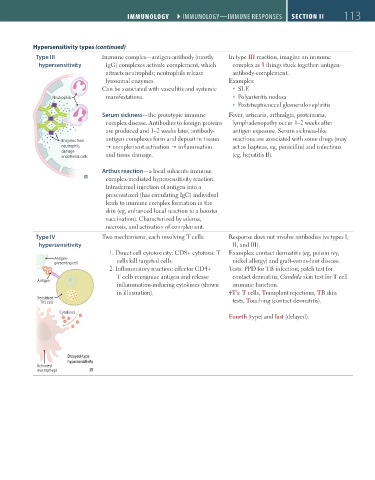
Serum sickness—the prototypic immune Fever, urticaria, arthralgia, proteinuria,
complex disease. Antibodies to foreign proteins lymphadenopathy occur 1–2 weeks after
are produced and 1–2 weeks later, antibody- antigen exposure. Serum sickness-like
antigen complexes form and deposit in tissues reactions are associated with some drugs (may
Enzymes from
neutrophils complement activation inflammation act as haptens, eg, penicillin) and infections
damage and tissue damage. (eg, hepatitis B).
endothelial cells
Arthus reaction—a local subacute immune
complex-mediated hypersensitivity reaction.
Intradermal injection of antigen into a
presensitized (has circulating IgG) individual
leads to immune complex formation in the
skin (eg, enhanced local reaction to a booster
vaccination). Characterized by edema,
necrosis, and activation of complement.
Type IV Two mechanisms, each involving T cells: Response does not involve antibodies (vs types I,
hypersensitivity II, and III).
1. Direct cell cytotoxicity: CD8+ cytotoxic T Examples: contact dermatitis (eg, poison ivy,
A Antigen- cells kill targeted cells. nickel allergy) and graft-versus-host disease.
presenting cell
2. Inflammatory reaction: effector CD4+ Tests: PPD for TB infection; patch test for
T cells recognize antigen and release contact dermatitis; Candida skin test for T cell
Antigen
inflammation-inducing cytokines (shown immune function.
in illustration). 4T’s: T cells, Transplant rejections, TB skin
Sensitized tests, Touching (contact dermatitis).
Th1 cell
Cytokines
Fourth (type) and last (delayed).
Delayed-type
hypersensitivity
Activated
macrophage
FAS1_2019_02-Immunology.indd 113 11/7/19 3:24 PM

