


Page 182 - First Aid for the USMLE Step 1 2020, Thirtieth edition [MedicalBooksVN.com]_Neat
P. 182
138 SEcTioN ii Microbiology ` microbiology—cliNical bacteriology Microbiology ` microbiology—cliNical bacteriology
Bacillus cereus Gram ⊕ rod. Causes food poisoning. Spores survive cooking rice (reheated rice syndrome).
Keeping rice warm results in germination of spores and enterotoxin formation.
Emetic type causes nausea and vomiting within 1–5 hours. Caused by cereulide, a preformed toxin.
Diarrheal type causes watery, nonbloody diarrhea and GI pain within 8–18 hours.
Management: supportive care (antibiotics are ineffective against toxins).
Clostridia Gram ⊕, spore-forming, obligate anaerobic rods. Tetanus toxin and botulinum toxin are proteases
that cleave SNARE proteins involved in neurotransmission.
Clostridium tetani Produces tetanospasmin, an exotoxin causing Tetanus is tetanic paralysis.
tetanus. Tetanospasmin blocks release of
GABA and glycine from Renshaw cells in
spinal cord.
Causes spastic paralysis, trismus (lockjaw), risus
sardonicus (raised eyebrows and open grin),
opisthotonos (spasms of spinal extensors).
Prevent with tetanus vaccine. Treat with
antitoxin +/− vaccine booster, antibiotics,
diazepam (for muscle spasms), and wound
debridement.
Clostridium botulinum Produces a heat-labile toxin that inhibits Symptoms of botulism (the 4 D’s): Diplopia,
ACh release at the neuromuscular junction, Dysarthria, Dysphagia, Dyspnea.
causing botulism. In adults, disease is caused Botulinum is from bad bottles of food, juice, and
by ingestion of preformed toxin. In babies, honey (causes a descending flaccid paralysis).
ingestion of spores (eg, in honey) leads to Local botulinum toxin A (Botox) injections used
disease (floppy baby syndrome). Treat with to treat focal dystonia, hyperhidrosis, muscle
human botulinum immunoglobulin. spasms, and cosmetic reduction of facial
wrinkles.
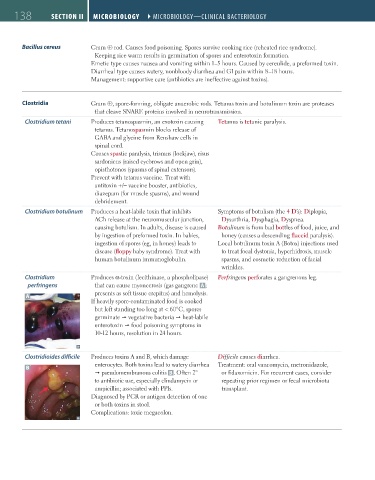
Clostridium Produces α-toxin (lecithinase, a phospholipase) Perfringens perforates a gangrenous leg.
perfringens that can cause myonecrosis (gas gangrene A ;
presents as soft tissue crepitus) and hemolysis.
A
If heavily spore-contaminated food is cooked
but left standing too long at < 60°C, spores
germinate vegetative bacteria heat-labile
enterotoxin food poisoning symptoms in
10-12 hours, resolution in 24 hours.
Clostridioides difficile Produces toxins A and B, which damage Difficile causes diarrhea.
enterocytes. Both toxins lead to watery diarrhea Treatment: oral vancomycin, metronidazole,
B
pseudomembranous colitis B . Often 2° or fidaxomicin. For recurrent cases, consider
to antibiotic use, especially clindamycin or repeating prior regimen or fecal microbiota
ampicillin; associated with PPIs. transplant.
Diagnosed by PCR or antigen detection of one
or both toxins in stool.
Complications: toxic megacolon.
FAS1_2019_03-Microbiology.indd 138 11/14/19 12:20 PM

