


Page 179 - First Aid for the USMLE Step 1 2020, Thirtieth edition [MedicalBooksVN.com]_Neat
P. 179
Microbiology ` microbiology—cliNical bacteriology Microbiology ` microbiology—cliNical bacteriology SEcTioN ii 135
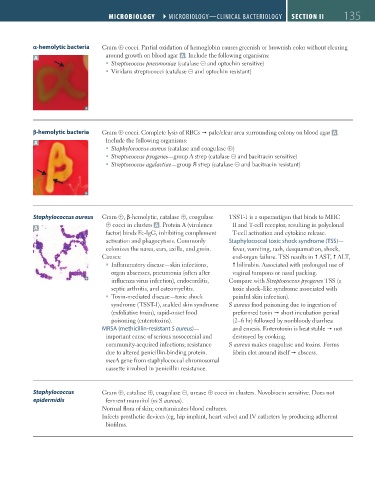
α-hemolytic bacteria Gram ⊕ cocci. Partial oxidation of hemoglobin causes greenish or brownish color without clearing
A around growth on blood agar A . Include the following organisms:
Streptococcus pneumoniae (catalase ⊝ and optochin sensitive)
Viridans streptococci (catalase ⊝ and optochin resistant)
β-hemolytic bacteria Gram ⊕ cocci. Complete lysis of RBCs pale/clear area surrounding colony on blood agar A .
A Include the following organisms:
Staphylococcus aureus (catalase and coagulase ⊕)
Streptococcus pyogenes—group A strep (catalase ⊝ and bacitracin sensitive)
Streptococcus agalactiae—group B strep (catalase ⊝ and bacitracin resistant)
Staphylococcus aureus Gram ⊕, β-hemolytic, catalase ⊕, coagulase TSST-1 is a superantigen that binds to MHC
⊕ cocci in clusters A . Protein A (virulence II and T-cell receptor, resulting in polyclonal
A
factor) binds Fc-IgG, inhibiting complement T-cell activation and cytokine release.
activation and phagocytosis. Commonly Staphylococcal toxic shock syndrome (TSS)—
colonizes the nares, ears, axilla, and groin. fever, vomiting, rash, desquamation, shock,
Causes: end-organ failure. TSS results in AST, ALT,
Inflammatory disease—skin infections, bilirubin. Associated with prolonged use of
organ abscesses, pneumonia (often after vaginal tampons or nasal packing.
influenza virus infection), endocarditis, Compare with Streptococcus pyogenes TSS (a
septic arthritis, and osteomyelitis. toxic shock–like syndrome associated with
Toxin-mediated disease—toxic shock painful skin infection).
syndrome (TSST-1), scalded skin syndrome S aureus food poisoning due to ingestion of
(exfoliative toxin), rapid-onset food preformed toxin short incubation period
poisoning (enterotoxins). (2–6 hr) followed by nonbloody diarrhea
MRSA (methicillin-resistant S aureus)— and emesis. Enterotoxin is heat stable not
important cause of serious nosocomial and destroyed by cooking.
community-acquired infections; resistance S aureus makes coagulase and toxins. Forms
due to altered penicillin-binding protein. fibrin clot around itself abscess.
mecA gene from staphylococcal chromosomal
cassette involved in penicillin resistance.
Staphylococcus Gram ⊕, catalase ⊕, coagulase ⊝, urease ⊕ cocci in clusters. Novobiocin sensitive. Does not
epidermidis ferment mannitol (vs S aureus).
Normal flora of skin; contaminates blood cultures.
Infects prosthetic devices (eg, hip implant, heart valve) and IV catheters by producing adherent
biofilms.
FAS1_2019_03-Microbiology.indd 135 11/14/19 12:20 PM

