


Page 189 - First Aid for the USMLE Step 1 2020, Thirtieth edition [MedicalBooksVN.com]_Neat
P. 189
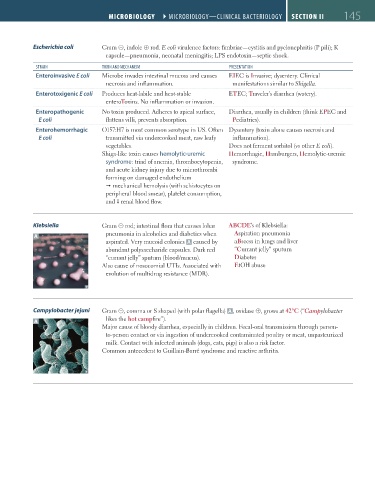
Microbiology ` microbiology—cliNical bacteriology Microbiology ` microbiology—cliNical bacteriology SEcTioN ii 145
Escherichia coli Gram ⊝, indole ⊕ rod. E coli virulence factors: fimbriae—cystitis and pyelonephritis (P pili); K
capsule—pneumonia, neonatal meningitis; LPS endotoxin—septic shock.
straiN toXiN aND mecHaNism PreseNtatioN
Enteroinvasive E coli Microbe invades intestinal mucosa and causes EIEC is Invasive; dysentery. Clinical
necrosis and inflammation. manifestations similar to Shigella.
Enterotoxigenic E coli Produces heat-labile and heat-stable ETEC; Traveler’s diarrhea (watery).
enteroToxins. No inflammation or invasion.
Enteropathogenic No toxin produced. Adheres to apical surface, Diarrhea, usually in children (think EPEC and
E coli flattens villi, prevents absorption. Pediatrics).
Enterohemorrhagic O157:H7 is most common serotype in US. Often Dysentery (toxin alone causes necrosis and
E coli transmitted via undercooked meat, raw leafy inflammation).
vegetables. Does not ferment sorbitol (vs other E coli).
Shiga-like toxin causes hemolytic-uremic Hemorrhagic, Hamburgers, Hemolytic-uremic
syndrome: triad of anemia, thrombocytopenia, syndrome.
and acute kidney injury due to microthrombi
forming on damaged endothelium
mechanical hemolysis (with schistocytes on
peripheral blood smear), platelet consumption,
and renal blood flow.
Klebsiella Gram ⊝ rod; intestinal flora that causes lobar ABCDE’s of Klebsiella:
A pneumonia in alcoholics and diabetics when Aspiration pneumonia
aspirated. Very mucoid colonies A caused by aBscess in lungs and liver
abundant polysaccharide capsules. Dark red “Currant jelly” sputum
“currant jelly” sputum (blood/mucus). Diabetes
Also cause of nosocomial UTIs. Associated with EtOH abuse
evolution of multidrug resistance (MDR).
Campylobacter jejuni Gram ⊝, comma or S shaped (with polar flagella) A , oxidase ⊕, grows at 42°C (“Campylobacter
A likes the hot campfire”).
Major cause of bloody diarrhea, especially in children. Fecal-oral transmission through person-
to-person contact or via ingestion of undercooked contaminated poultry or meat, unpasteurized
milk. Contact with infected animals (dogs, cats, pigs) is also a risk factor.
Common antecedent to Guillain-Barré syndrome and reactive arthritis.
FAS1_2019_03-Microbiology.indd 145 11/14/19 12:20 PM

