


Page 190 - First Aid for the USMLE Step 1 2020, Thirtieth edition [MedicalBooksVN.com]_Neat
P. 190
146 SEcTioN ii Microbiology ` microbiology—cliNical bacteriology Microbiology ` microbiology—cliNical bacteriology
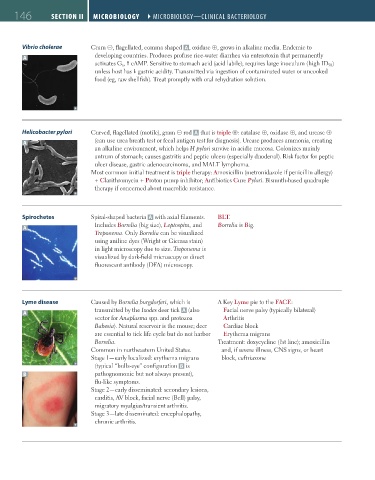
Vibrio cholerae Gram ⊝, flagellated, comma shaped A , oxidase ⊕, grows in alkaline media. Endemic to
A developing countries. Produces profuse rice-water diarrhea via enterotoxin that permanently
activates G s , cAMP. Sensitive to stomach acid (acid labile); requires large inoculum (high ID 50 )
unless host has gastric acidity. Transmitted via ingestion of contaminated water or uncooked
food (eg, raw shellfish). Treat promptly with oral rehydration solution.
Helicobacter pylori Curved, flagellated (motile), gram ⊝ rod A that is triple ⊕: catalase ⊕, oxidase ⊕, and urease ⊕
A (can use urea breath test or fecal antigen test for diagnosis). Urease produces ammonia, creating
an alkaline environment, which helps H pylori survive in acidic mucosa. Colonizes mainly
antrum of stomach; causes gastritis and peptic ulcers (especially duodenal). Risk factor for peptic
ulcer disease, gastric adenocarcinoma, and MALT lymphoma.
Most common initial treatment is triple therapy: Amoxicillin (metronidazole if penicillin allergy)
+ Clarithromycin + Proton pump inhibitor; Antibiotics Cure Pylori. Bismuth-based quadruple
therapy if concerned about macrolide resistance.
Spirochetes Spiral-shaped bacteria A with axial filaments. BLT.
Includes Borrelia (big size), Leptospira, and Borrelia is Big.
A
Treponema. Only Borrelia can be visualized
using aniline dyes (Wright or Giemsa stain)
in light microscopy due to size. Treponema is
visualized by dark-field microscopy or direct
fluorescent antibody (DFA) microscopy.
Lyme disease Caused by Borrelia burgdorferi, which is A Key Lyme pie to the FACE:
A transmitted by the Ixodes deer tick A (also Facial nerve palsy (typically bilateral)
vector for Anaplasma spp. and protozoa Arthritis
Babesia). Natural reservoir is the mouse; deer Cardiac block
are essential to tick life cycle but do not harbor Erythema migrans
Borrelia. Treatment: doxycycline (1st line); amoxicillin
Common in northeastern United States. and, if severe illness, CNS signs, or heart
Stage 1—early localized: erythema migrans block, ceftriaxone
(typical “bulls-eye” configuration B is
B pathognomonic but not always present),
flu-like symptoms.
Stage 2—early disseminated: secondary lesions,
carditis, AV block, facial nerve (Bell) palsy,
migratory myalgias/transient arthritis.
Stage 3—late disseminated: encephalopathy,
chronic arthritis.
FAS1_2019_03-Microbiology.indd 146 11/14/19 12:20 PM

