


Page 567 - First Aid for the USMLE Step 1 2020, Thirtieth edition [MedicalBooksVN.com]_Neat
P. 567
Neurology aNd Special SeNSeS ` neurology—PAthology Neurology aNd Special SeNSeS ` neurology—PAthology SecTioN iii 523
Multiple sclerosis Autoimmune inflammation and demyelination of CNS (brain and spinal cord) with subsequent
axonal damage. Can present with:
Acute optic neuritis (painful unilateral visual loss associated with Marcus Gunn pupil)
Brain stem/cerebellar syndromes (eg, diplopia, ataxia, scanning speech, intention tremor,
nystagmus/INO [bilateral > unilateral])
Pyramidal tract demyelination (eg, weakness, spasticity)
Spinal cord syndromes (eg, electric shock-like sensation along cervical spine on neck flexion,
neurogenic bladder, paraparesis, sensory manifestations affecting the trunk or one or more
extremity)
Symptoms may exacerbate with increased body temperature (eg, hot bath, exercise). Relapsing and
remitting is most common clinical course. Most often affects women in their 20s and 30s; more
common in individuals living farther from equator and with low serum vitamin D levels.
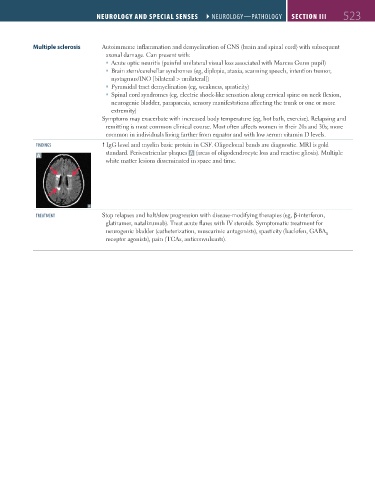
Findings IgG level and myelin basic protein in CSF. Oligoclonal bands are diagnostic. MRI is gold
standard. Periventricular plaques A (areas of oligodendrocyte loss and reactive gliosis). Multiple
A
white matter lesions disseminated in space and time.
treAtment Stop relapses and halt/slow progression with disease-modifying therapies (eg, β-interferon,
glatiramer, natalizumab). Treat acute flares with IV steroids. Symptomatic treatment for
neurogenic bladder (catheterization, muscarinic antagonists), spasticity (baclofen, GABA
B
receptor agonists), pain (TCAs, anticonvulsants).
FAS1_2019_12-Neurol.indd 523 11/8/19 7:39 AM

