


Page 247 - APPLIED PROCESS DESIGN FOR CHEMICAL AND PETROCHEMICAL PLANTS, Volume 1, 3rd Edition
P. 247
Pumping of Liquids                                       217

                                                        R,  ..  o  ••  ble  ttun cl.nt
                                                        cou,,  P4naftfln!  quld1
                                                        •«•• to  ll"m  ....  R" ..
                                                                   Rr,1d  nd Iron  cradl ..
                                                                  of Hrnlcircul., Hction.
                                                                  Hturln 11 li;:::::h   .nd


                                                                            Twin  llquld  cyllncl1tt  m•·
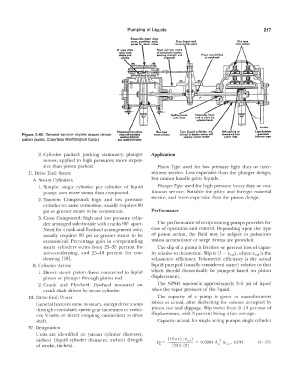
          Figure 3-66.  General  service duplex steam  driven               cMned IA  dwpfu botint •ill
                                                                              au•ri111 cotnd ccn19f'I
          piston pump.  (Courtesy Worthington Corp.)

                 2.  Cylinder  packed:  packing  stationary;  plunger   Application
                   moves;  applied  to  high  pressures;  more  expen-
                   sive than  piston  packed.                      Piston  Type:  used  for low  pressure  light duty  or  inter-
             II.  Drive End:  Steam                             mittent  service.  Less  expensive  than  the  plunger design,
               A.  Steam Cylinders                              but cannot handle gritty liquids.
                 1. Simple:  single  cylinder  per  cylinder  of liquid   Plunger Type:  used for high pressure heavy duty or con-
                   pump;  uses more steam than compound.        tinuous  service.  Suitable  for gritty  and  foreign  material
                                                                service, and more  expensive than  the piston design.
                 2. Tandem  Compound;  high  and  low  pressure
                   cylinder on same centerline; usually requires 80
                   psi  or greater steam  to be economical.     Performance
                 3.  Cross  Compound:  high  and  low  pressure  cylin-
                   der arranged side-by-side with cranks 90°  apart.   The performance of reciprocating pumps provides for
                   Need for crank and flywheel arrangement only;   ease of operation and control.  Depending upon  the type
                   usually  requires  80  psi  or greater  steam  to  be   of piston  action,  the  fluid  may  be  subject to  pulsations
                   economical.  Percentage  gain  in  compounding   unless accumulator or surge  drums are provided.
                   steam  cylinders  varies  from  25-35  percent for   The slip of a  pump is fraction or percent loss of capac-
                   non-condensing,  and  25-40  percent  for  con-   ity relative to theoretical. Slip is  (1  - ev 01), where e, 01  is the
                   densing  [] 8].                              volumetric  efficiency.  Volumetric  efficiency  is  the  actual
               B.  Cylinder Action                              liquid pumped  (usually considered water)  relative to that
                 l. Direct:  steam  piston  direct connected  to  liquid   which  should  theoretically  be  pumped  based  on  piston
                   piston or plunger through  piston rod.       displacement.
                 2.  Crank  and  Flvwheel:  flvwheel  mounted  on   The  NPSH  required  is  approximately  3-5  psi  of liquid
                                /         /
                   crank shaft driven by  steam  cylinder.      above the vapor pressure of the liquid.
             III.  Drive End:  Power                               The  capacity  of  a  pump  is  given  in  manufacturers
                General features same as steam, except drive always   tables  as  actual,  after deducting  for volume  occupied  by
                through crankshaft; speed gear increasers or reduc-   piston  rod and slippage.  Slip varies  from 2-10 percent of
                ers;  Vbelts,  or direct coupling connection  to  drive   displacement,  with  3  percent being a fair average.
                shaft.                                             Capacity:  actual, for single acting pumps,  single cylinder
             IV.  Designation
                Units  are  identified  as:  (steam  cylinder  diameter,
                                                                       (l2a t)  (e"
                                                                                01)
                inches)  (liquid  cylinder  diameter,  inches)  (length   Q=  ------'-'-                     (3- 47)
                of stroke, inches).                                      (231)  (2)   0.0204 ct/  tevoi'  GPM

