


Page 429 - APPLIED PROCESS DESIGN FOR CHEMICAL AND PETROCHEMICAL PLANTS, Volume 1, 3rd Edition
P. 429
Ejectors and Mechanical Vacuum Systems                             395

            20                                                     30
                  '  i                                                                I               ............
                                                                 c,  20
            18                                                   iii                  I                   r,,,.,.,,.
                   l                                             c..
                                                                 I             Pressure capability           l
                                                                 E  10
            16                                                   ::,                    for
                                        !                        Ill
                                                                 Ill
            14                                                   5-  5         rotary lobe blowers
          .5!                                                    Cl)
          �                                                      e>
                                                                 al
          c:  12                                                 .c:
          e
          ·;;;    I                                              "
                                                                 Ill
          Ill                                                    c
          �  10                                                                                  I
          a.       I                                               1                             .
          E                                                         50   100      500   1,000   5,000   10,000   50,000
          0
          o  8                                                                      Inlet volume -  CFM
                               high vacuum
             6                   boosters                          22         I
                                I  Ii I   I   I                  E  20
                                                                 ::,
             4                                                   i:l  18
                               i                                �  16
                               i                                                                             \
             2                                                   b,  14        Vacuum capability
                               I
              50   100        500   1,000    5,000   10,000   30,000   ! 12      I  I   I  I   II  f   l   I   I  II   '
                                                                                     11  or
                            Gross displacement -  CFM           1!  10         rotary lobe blowers             ,
                                                                 "
                                                                -=   8
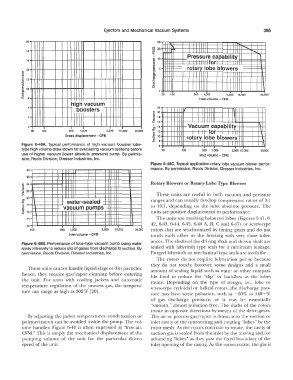
          Figure  6-48A.  Typical  performance  of high  vacuum  booster lobe-   6      11  I     I  .  I
                                                                                      I
                                                                                          I
          type high volume draw-down for evacuating vacuum systems before   50   100   500   1,000   5,000  10,000   50,000
          use of higher vacuum  (lower absolute  pressure)  pump.  By  pennis-      Inlet volume -  CFM
          sion,  Roots Division,  Dresser Industries,  Inc.
                                                                Figure 6-48C. Typical application rotary lobe vacuum blower perfor-
                                                                mance.  By permission,  Roots  Division,  Dresser Industries,  Inc.
            28
            26
          E  24                                                 Rotary Blowers or Rotary Lobe-Type Blowers
          ::,
          ::,   22
          "
          "'
          :,.  '                                                  These  units  are  useful  in  both  vacuum  and  pressure
          "'
          :c   20            water-sealed                       ranges and can usually develop compression  ratios  of 3:1
          Ill  18                                               to  10:1,  depending  on  the  inlet  absolute  pressure.  The
          "
          .c:              vacuum pumps
          "  16
          -=                                                    units are positive displacement in performance.
            14                                                    The units use meshing balanced lobes  (Figures 6-41, 6-
                I                                               42,  6-43,  6-44,  6-45,  6-46 A,  B,  C  and  6-47)  or screw-type
            12
              100         500   1,000      5,000   10,000   30,000   rotors  that are  synchronized by  timing gears  and do  not
                              lnlet volume -  CFM               touch  each  other or  the  housing  with  very  close  toler-
                                                                ances.  The shafts of the driving shaft and driven shaft are
          Figure 6-486.  Perfcnnance of lobe-type vacuum pump using water
          spray internally to reduce slip of gases from discharge to suction. By   sealed with  labyrinth  type  seals  for a  minimum  leakage.
          permission,  Roots Division,  Dresser Industries,  Inc.   Purged labyrinth or mechanical  type seals are available.
                                                                  The  rotors  do  not require  lubrication  per se  because
                                                                they  do  not  touch;  however,  some  designs  add  a  small
             These units cannot handle iiquid slugs or dirt particles;   amount of sealing liquid such as water or other compati-
          hence,  they  require  gas/vapor cleaning  before  entering   ble  fluid  to  reduce  the  "slip"  or  backflow  as  the  lobes
          the  unit.  For  units  with  cooiing jackets  and  automatic   rotate.  Depending  on  the  type  of design,  i.e.,  lobe  or
          temperature  regulation  of the  process  gas,  the  tempera-   screw-type  cycloidal  or helical  rotors,  the  discharge  pres-
          ture can range as  high  as 302°F  [20].
                                                                sure  may  have  some  pulsation,  such as  -60%  to  140+%
                                                                of  gas  discharge  pressure,  or  it  may  be  essentially
                                                                "smooth,"  almost pulsation free.  The  shafts  of the  rotors
                                                                rotate .in  opposite directions by means of the drive gears.
             By adjusting the jacket temperatures,  condensation or   The air or process gas/vapor is drawn .into the suction or
          polymerization can be avoided inside the pump.  The vol-   inlet cavity  of the intersecting and rotating "lobes" by  the
          ume  handled  Figure  6-40  is  often  expressed  as  "free  air,   rotor mesh. As  the rotors  continue to rotate,  the cavity of
          CFM." This is  simply  the mechanical  displacement of the   suction gas is sealed from the inlet by  the moving and/  or
          pumping  volume  of  the  unit  for  the  particular  driven   advancing "lobes" as  they  pass  the fixed boundary of the
          speed of the unit.                                    inlet opening of the casing.  AI;  the rotors rotate, the gas is

