


Page 535 - APPLIED PROCESS DESIGN FOR CHEMICAL AND PETROCHEMICAL PLANTS, Volume 1, 3rd Edition
P. 535
Applied Process Design                                     501

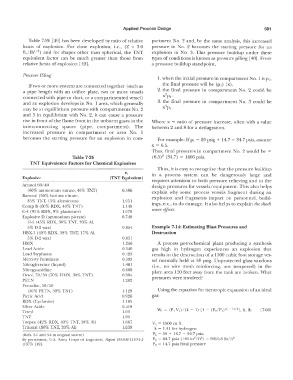
             Table 7-26  [ 49]  has been developed by ratio of relative   partrnent No.  2  and,  by  the same  analysis,  this increased
           heats  of  explosion.  For  close  explosion,  i.e.,  (Z  <  3.0   pressure  in  No.  2  becomes  the  starting  pressure  for  an
           ft./lb 1  and  for shapes  other than  spherical,  the  TNT   explosion  in  No.  3.  This  pressure  buildup  under  these
               1 3)
           equivalent factor  can  be  much  greater  than  those  from   types of conditions is known as pressure piling  [ 40]. From
           relative heats of explosion  [ 49].                  a  pressure buildup standpoint,

           Pressure Piling
                                                                   1. when the initial pressure in compartment No.  1  is Pr-
             If two or more systems are connected together (such as   the final  pressure will be  (p 1)  (x).
           a  pipe  length  with  an  orifice  plate,  two  or more  vessels   2.  the  final  pressure  in  compartment No.  2  could  be
           connected with  pipe or duct,  or a compartmented vessel)   X2PI·
           and an  explosion  develops in No.  1  area,  which generally   3.  the  final  pressure  in  compartment No.  3  could  be
           may be at equilibrium pressure with  compartments No.  2   X3Pl·
           and  3  in  equilibrium  with  No.  2,  it can  cause  a  pressure
           rise in front of the flame front in the unburnt gases in the   Where x  =  ratio  of pressure  increase,  often  with  a  value
           interconnecting  spaces  (pipe,  compartment).  The   between  2  and 8  for a  deflagration.
           increased  pressure  in  compartment  or  area  No.  1
           becomes  the  starting  pressure  for an  explosion  in  com-   For example: If  p1  = 20 psig +  14. 7  = 34. 7 psi a, assume
                                                                x  =  6.5.
                                                                Thus,  final  pressures  in  compartment No.  2  would be
                               Table 7-26                        (6.5)2  (34.7)  =  1466  psia.
             TNT Equivalence Factors for Chemical Explosives
                                                                   Thus, it is easy to recognize that the pressure buildup
                                                     e,         in  a  process  system  can  be  dangerously  large  and
          Explosive                            (TNT Equivalent)
                                                                requires  attention  to  both  pressure relieving and to  the
          Amato!  60/40                                         design pressures for vessels/  equipment.  This also  helps
             (60%  ammonium  nitrate,  40%  TNT)    0.586       explain  why  some  process  vesseis  fragment during  an
          Barona!  (50%  barium  nitrate,                       explosion  and  fragments  impact  on  personnel,  build-
            35% TNT,  15%  aluminum)                1.051
          Comp B  (60% RDX, 40% TNT)                1.148       ings, etc., to do damage.  It also helps to explain  the shock
          C-4  (91 %  ROX, 9%  plasticizer)         1.078       wave effects.
          Explosive  D  (ammonium  picrate)         0.740
            H-6  (45%  ROX, 30% T'.'JT,  20%  Al,
            5%  D-2 wax)                            0.854       Example 7-14:  Estimating Blast Pressures and
          HBX-1  (40%  RDX,  38%  TNT,  17%  Al,                Destruction
            5%  D-2 wa  ..  x )                     0.851
          HMX                                       l .256         A  process  petrochemical  plant producing  a  synthesis
          Lead Azide                                0.340       gas  high  in  hydrogen  experiences  an  explosion  that
          Lead Sryphriate                           0.423       results in the destruction of a 1500 cubic foot storage ves-
           Mercury Fulminate                        0.395       sel  normally  held at 50  psig.  Unprotected glass  windows
          Nitroglyccrlnc (liquid)                   1.481        (i.e.,  no  wire  mesh  reinforcing,  nor  tempered)  in  the
           Ni troguanidinc                          0.668       plant area  150 feet away from  the tank are  broken. What
          Octol, 70/30  (70% HMX, 30% TNT)          0.994       pressures were involved?
          PETN                                      1.282
          Pentolitc, 50/50
             (5C%  PETN, 50% TNT)                   1.129          Using the equation for isen tropic expansion of  an ideal
          Picric Acid                               0.926       gas:
          RDX  (Cyc!onite)                          1.185
          Silver Azide                              0.419
          Tetryl                                    1.00                                                      (7-60)
          Tl\T                                      1.00
          Torpex  (42%  R.DX,  40%  TNT,  18% Al)   1.667        V 1  =  1500 cu ft
          Tri tonal  (80% TNT,  20% Al)             1.639         k  =  l.41  for hydrogen

           (Refs.  3-1  and 3-4  in original  source)            P1  =  50  +  14.7 =  64.7 psia
                                                                                  2
          By  permission,  U.S.  Anny  Corps  of  Engineers,  Report  HN[Ji\l[.J J I0-1-2   P1  =  64.7 psia  (144 in /ft 2)  =  9316.8 lb/ft 2
           (1977)  [49]                                          P 2  =  14.7 psia final pressure

