


Page 384 - Critical Care Nursing Demystified
P. 384
Chapter 8  CARE OF THE PATIENT WITH CRITICAL RENAL NEEDS        369


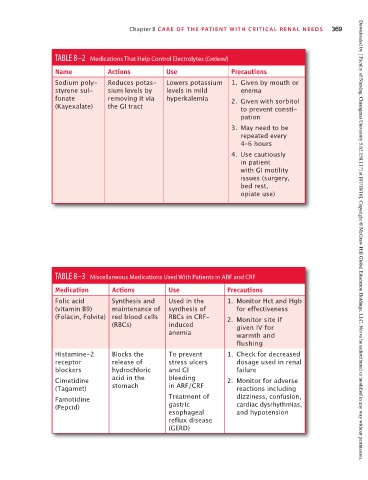
                               TABLE 8–2  Medications That Help Control Electrolytes (Continued)
                               Name           Actions          Use               Precautions
                               Sodium poly-   Reduces potas-   Lowers potassium   1.  Given by mouth or
                               styrene sul-   sium levels by   levels in mild      enema
                               fonate         removing it via   hyperkalemia     2.  Given with sorbitol
                               (Kayexalate)   the GI tract                         to prevent consti-
                                                                                   pation
                                                                                 3.  May need to be
                                                                                   repeated every
                                                                                   4–6 hours
                                                                                 4.  Use cautiously
                                                                                   in patient
                                                                                   with GI motility
                                                                                   issues (surgery,
                                                                                   bed rest,
                                                                                   opiate use)


                               TABLE 8–3  Miscellaneous Medications Used With Patients in ARF and CRF               Downloaded by [ Faculty of Nursing, Chiangmai University 5.62.158.117] at [07/18/16]. Copyright © McGraw-Hill Global Education Holdings, LLC. Not to be redistributed or modified in any way without permission.
                               Medication      Actions         Use              Precautions
                               Folic acid      Synthesis and   Used in the      1.  Monitor Hct and Hgb
                               (vitamin B9)    maintenance of  synthesis of       for effectiveness
                               (Folacin, Folvite) red blood cells   RBCs in CRF-  2.  Monitor site if
                                               (RBCs)          induced            given IV for
                                                               anemia             warmth and
                                                                                  flushing
                               Histamine-2     Blocks the      To prevent       1.  Check for decreased
                               receptor        release of      stress ulcers      dosage used in renal
                               blockers        hydrochloric    and GI             failure
                               Cimetidine      acid in the     bleeding         2.  Monitor for adverse
                               (Tagamet)       stomach         in ARF/CRF         reactions including
                               Famotidine                      Treatment of       dizziness, confusion,
                               (Pepcid)                        gastric            cardiac dysrhythmias,
                                                               esophageal         and hypotension
                                                               reflux disease
                                                               (GERD)

