


Page 104 - Hall et al (2015) Principles of Critical Care-McGraw-Hill
P. 104
72      PART 1: An Overview of the Approach to and Organization of Critical Care


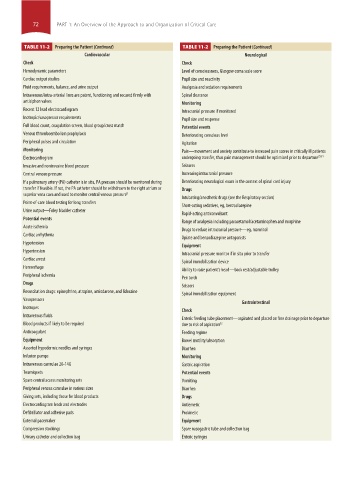
                   TABLE 11-2    Preparing the Patient (Continued)       TABLE 11-2    Preparing the Patient (Continued)
                                       Cardiovascular                                        Neurological
                  Check                                                 Check
                  Hemodynamic parameters                                Level of consciousness, Glasgow coma scale score
                  Cardiac output studies                                Pupil size and reactivity
                  Fluid requirements, balance, and urine output         Analgesia and sedation requirements
                  Intravenous/intra-arterial lines are patent, functioning and secured firmly with    Spinal clearance
                  antisiphon valves                                     Monitoring
                  Recent 12 lead electrocardiogram                      Intracranial pressure if monitored
                  Inotropic/vasopressor requirements                    Pupil size and response
                  Full blood count, coagulation screen, blood group/cross match  Potential events
                  Venous thromboembolism prophylaxis                    Deteriorating conscious level
                  Peripheral pulses and circulation                     Agitation
                  Monitoring                                            Pain—movement and anxiety contribute to increased pain scores in critically ill patients
                  Electrocardiogram                                     undergoing transfer, thus pain management should be optimized prior to departure 29,51
                  Invasive and noninvasive blood pressure               Seizures
                  Central venous pressure                               Increasing intracranial pressure
                  If a pulmonary artery (PA) catheter is in situ, PA pressure should be monitored during   Deteriorating neurological exam in the context of spinal cord injury
                  transfer if feasible. If not, the PA catheter should be withdrawn to the right atrium or   Drugs
                  superior vena cava and used to monitor central venous pressure 8
                                                                        Intubating/anesthetic drugs (see the Respiratory section)
                  Point-of-care blood testing for long transfers
                                                                        Short-acting sedatives, eg, benzodiazepine
                  Urine output—Foley bladder catheter
                                                                        Rapid-acting anticonvulsant
                  Potential events
                                                                        Range of analgesia including paracetamol/acetaminophen and morphine
                  Acute ischemia
                                                                        Drugs to reduce intracranial pressure—eg, mannitol
                  Cardiac arrhythmia
                                                                        Opiate and benzodiazepine antagonists
                  Hypotension
                                                                        Equipment
                  Hypertension
                                                                        Intracranial pressure monitor if in situ prior to transfer
                  Cardiac arrest
                                                                        Spinal immobilization device
                  Hemorrhage                                            Ability to raise patient’s head—back rest/adjustable trolley
                  Peripheral ischemia
                                                                        Pen torch
                  Drugs
                                                                        Scissors
                  Resuscitation drugs: epinephrine, atropine, amiodarone, and lidocaine  Spinal immobilization equipment
                  Vasopressors
                                                                                            Gastrointestinal
                  Inotropes
                                                                        Check
                  Intravenous fluids
                                                                        Enteric feeding tube placement—aspirated and placed on free drainage prior to departure
                  Blood products if likely to be required               due to risk of aspiration 52
                  Anticoagulant                                         Feeding regime
                  Equipment                                             Bowel motility/absorption
                  Assorted hypodermic needles and syringes              Diarrhea
                  Infusion pumps                                        Monitoring
                  Intravenous cannulae 20-14G                           Gastric aspiration
                  Tourniquets                                           Potential events
                  Spare central access monitoring sets                  Vomiting
                  Peripheral venous cannulae in various sizes           Diarrhea
                  Giving sets, including those for blood products       Drugs
                  Electrocardiogram leads and electrodes                Antiemetic
                  Defibrillator and adhesive pads                       Prokinetic
                  External pacemaker                                    Equipment
                  Compression stockings                                 Spare nasogastric tube and collection bag
                  Urinary catheter and collection bag                   Enteric syringes


            Section01.indd   72                                                                                        1/22/2015   9:37:12 AM

