


Page 267 - Hall et al (2015) Principles of Critical Care-McGraw-Hill
P. 267
CHAPTER 25: Cardiopulmonary Resuscitation  171


                       1) Definition                                       1) Primary ABCD assessment
                          Slow: absolute bradycardia = <60 bpm                  Check responsiveness
                                    or                                          Activate emergency response system
                          Relatively slow: rate less than expected relative to condition or  Call for defibrillator
                          cause
                                                                               A Airway—open airway
                                                                               B Breathing—positive pressure ventilations
                       2) Primary ABCD assessment                              C Circulation—chest compressions
                          Assess ABCs                                          C Confirm true asystole
                          Secure airway noninvasively                          D Defibrillation—assess for and shock VF/pulseless VT
                          Ensure availability of monitor/defibrillator
                                                                           2) Check rhythm
                       3) Reassess patient                                 3) Persistent or recurrent VF/VT
                          Assess secondary ABCs (need invasive airway?)
                          Oxygen—IV access—monitor—fluids                   4) Re-assess patient
                          Vital signs, pulse oximeter, monitor blood pressure
                          Obtain and review 12-lead ECG                        A Airway—airway device
                          Obtain and review portable chest x-ray               B Breathing—confirm airway device placement
                          Problem-focused history                              B Breathing—secure airway device
                          Problem-focused physical examination                 B Breathing—confirm effective oxygenation and ventilation
                          Consider causes (di erential diagnosis)              C Circulation—establish IV access
                                                                               C Circulation—identify rhythm
                                                                               C Circulation—administer appropriate drugs based on rhythm
                       4) Serious signs or symptoms due to the bradycardia?           and condition
                                                                               D Differential diagnosis—search for and treat reversible causes

                        6) Type II second-degree AV block  5) Intervention sequence  5) Epinephrine or vasopressin at appropriate dose
                                   or                Epinephrine
                            Third-degree AV block?   Transcutaneous pacing  6) Resume attempts to defibrillate
                                                     Dopamine              7) Consideration of antiarrythmics
                                                     Isoproterenol
                                                                                Amiodarone
                                                                                Lidocaine
                       Observe          Prepare for transvenous pacing          Magnesium
                                        If symptoms develop, use transcutaneous  Procainamide
                                        pacemaker until pacer placed
                                                                           8) Resume attempts to defibrillate
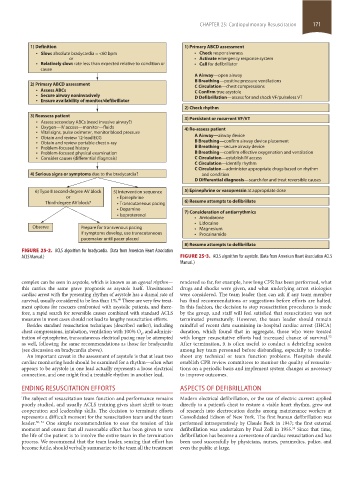
                    FIGURE 25-2.  ACLS algorithm for bradycardia. (Data from American Heart Association
                    ACLS Manual.)                                         FIGURE 25-3.  ACLS algorithm for asystole. (Data from American Heart Association ACLS
                                                                          Manual.)


                    complex can be seen in asystole, which is known as an agonal rhythm—  rendered so far, for example, how long CPR has been performed, what
                    this carries the same grave prognosis as asystole itself. Unwitnessed   drugs and shocks were given, and what underlying arrest etiologies
                    cardiac arrest with the presenting rhythm of asystole has a dismal rate of   were considered. The team leader then can ask if any team member
                    survival, usually considered to be less than 1%.  There are very few treat-  has final recommendations or suggestions before efforts are halted.
                                                    49
                    ment options for rescuers confronted with asystolic patients, and there-  In this fashion, the decision to stop resuscitation procedures is made
                    fore, a rapid search for reversible causes combined with standard ACLS   by the group, and staff will feel satisfied that resuscitation was not
                    measures in most cases should not lead to lengthy resuscitation efforts.  terminated prematurely. However, the team leader should remain
                     Besides standard resuscitation techniques (described earlier), including    mindful of recent data examining in-hospital cardiac arrest (IHCA)
                    chest compressions, intubation, ventilation with 100% O , and adminis-  duration, which found that in aggregate, those who were treated
                                                            2
                    tration of epinephrine, transcutaneous electrical pacing may be attempted   with longer resuscitative efforts had increased chance of survival.
                                                                                                                            52
                    as well, following the same recommendations as those for bradycardia   After termination, it is often useful to conduct a debriefing session
                    (see discussion on bradycardia above).                among key team personnel before disbanding, especially to trouble-
                     An important caveat in the assessment of asystole is that at least two   shoot any technical or team function problems. Hospitals should
                    cardiac monitoring leads should be examined for a rhythm—often what   establish CPR review committees to monitor the quality of resuscita-
                    appears to be asystole in one lead actually represents a loose electrical   tions on a periodic basis and implement system changes as necessary
                    connection, and one might find a treatable rhythm in another lead.  to improve outcomes.
                    ENDING RESUSCITATION EFFORTS                          ASPECTS OF DEFIBRILLATION

                    The subject of resuscitation team function and performance remains   Modern electrical defibrillation, or the use of electric current applied
                    poorly studied, and usually ACLS training gives short shrift to team   directly to a patient’s chest to restore a viable heart rhythm, grew out
                    cooperation and leadership skills. The decision to terminate efforts   of research into electrocution deaths among maintenance workers at
                    represents a difficult moment for the resuscitation team and the team   Consolidated Edison of New York. The first human defibrillation was
                    leader. 50, 51  One simple recommendation to ease the tension of this   performed intraoperatively by Claude Beck in 1947; the first external
                    moment and ensure that all reasonable effort has been given to save   defibrillation was undertaken by Paul Zoll in 1955.  Since that time,
                                                                                                                53
                    the life of the patient is to involve the entire team in the termination   defibrillation has become a cornerstone of cardiac resuscitation and has
                    process. We recommend that the team leader, sensing that effort has   been used successfully by physicians, nurses, paramedics, police, and
                    become futile, should verbally summarize to the team all the treatment   even the public at large.


            section02.indd   171                                                                                       1/13/2015   2:05:12 PM

