


Page 407 - Hall et al (2015) Principles of Critical Care-McGraw-Hill
P. 407
CHAPTER 35: Ventricular Dysfunction in Critical Illness   277


                                                                          intrapulmonary shunt.  Titrated morphine doses decrease venous tone
                                                                                          74
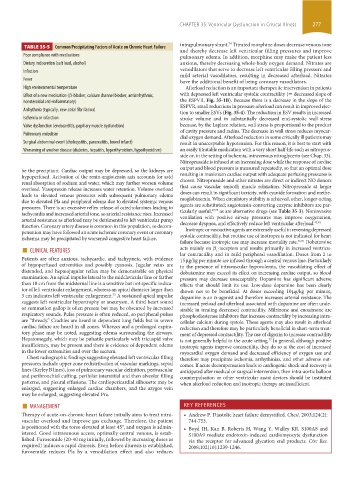
                      TABLE 35-5    Common Precipitating Factors of Acute on Chronic Heart Failure
                                                                          and thereby decrease left ventricular filling pressures and improve
                    Poor compliance with medications                      pulmonary edema. In addition, morphine may make the patient less
                    Dietary indiscretion (salt load, alcohol)             anxious, thereby decreasing whole-body oxygen demand. Nitrates are
                    Infection                                             venodilators that serve to decrease left ventricular  filling pressure and
                                                                          mild arterial vasodilators, resulting in decreased afterload. Nitrates
                    Fever                                                 have the additional benefit of being coronary vasodilators.
                    High environmental temperature                         Afterload reduction is an important therapeutic intervention in patients
                    Effect of a new medication (β-blocker, calcium channel blocker, antiarrhythmic,   with depressed left ventricular systolic contractility (= decreased slope of
                      nonsteroidal anti-inflammatory)                     the ESPVR, Fig. 35-1B). Because there is a decrease in the slope of the
                                                                          ESPVR, small reductions in pressure afterload can result in improved ejec-
                    Arrhythmia (typically, new atrial fibrillation)
                                                                          tion to smaller ESVs (Fig. 35-4). The reduction in ESV results in increased
                    Ischemia or infarction                                stroke volume and in substantially decreased end-systolic wall stress
                    Valve dysfunction (endocarditis, papillary muscle dysfunction)  because, by the Laplace relation, wall stress is proportional to the product
                                                                          of cavity pressure and radius. The decrease in wall stress reduces myocar-
                    Pulmonary embolism
                                                                          dial oxygen demand. Afterload reduction in some critically ill patients may
                    Surgical abdominal event (cholecystitis, pancreatitis, bowel infarct)  result in unacceptable hypotension. For this reason, it is best to start with
                    Worsening of another disease (diabetes, hepatitis, hyperthyroidism, hypothyroidism)  an easily titratable medication with a very short half-life such as nitroprus-
                                                                          side or, in the setting of ischemia, intravenous nitroglycerin (see Chap. 33).
                                                                          Nitroprusside is infused at an increasing dose while the response of cardiac
                                                                          output and blood pressure is measured repeatedly, so that an optimal dose
                    be the precipitant. Cardiac output may be depressed, so the kidneys are
                    hypoperfused. Activation of the renin-angiotensin axis accounts for avid   resulting in maximum cardiac output with adequate perfusing pressures is
                    renal absorption of sodium and water, which may further worsen volume   chosen. Nitroprusside and other nitrates are direct or indirect NO donors
                    overload. Vasopressin release increases water retention. Volume overload   that  cause vascular  smooth  muscle  relaxation.  Nitroprusside at  larger
                    leads to elevated venous pressures with subsequent pulmonary edema   doses can result in significant toxicity, with cyanide formation and methe-
                    due to elevated Pla and peripheral edema due to elevated systemic venous   moglobinemia. When circulatory stability is achieved, other, longer-acting
                    pressures. There is an excessive reflex release of catecholamines leading to   agents are substituted; angiotensin-converting enzyme inhibitors are par-
                                                                                    27,75
                    tachycardia and increased arterial tone, so arterial resistance rises. Increased   ticularly useful,   as are alternative drugs (see Table 35-3). Noninvasive
                    arterial resistance as afterload may be detrimental to left ventricular pump   ventilation with positive airway pressures may improve oxygenation,
                                                                                                                       47,48
                    function. Coronary artery disease is common in this population, so decom-  decrease dyspnea, and effectively reduce left ventricular afterload.
                    pensation may have followed an acute ischemic coronary event or coronary   Inotropic or vasoactive agents are extremely useful in reversing depressed
                    ischemia may be precipitated by worsened congestive heart failure.  systolic contractility, but routine use of inotropes is not indicated for heart
                                                                                                                     Dobutamine
                                                                          failure because inotropic use may increase mortality rate.
                                                                                                                  46,76
                        ■  CLINICAL FEATURES                              acts mainly on β -receptors and results primarily in increased ventricu-
                                                                                      1
                    Patients are often anxious, tachycardic, and tachypneic, with evidence   lar contractility and in mild peripheral vasodilation. Doses from 2 to
                                                                          15 µg/kg per minute are infused through a central venous line. Particularly
                    of hypoperfused extremities and possibly cyanosis. Jugular veins are   in the presence of intravascular hypovolemia, the vasodilating effect of
                    distended, and hepatojugular reflux may be demonstrable on physical   dobutamine may exceed its effect on increasing cardiac output, so blood
                    examination. An apical impulse lateral to the midclavicular line or farther   pressure may decrease unacceptably. Dopamine has significant adverse
                    than 10 cm from the midsternal line is a sensitive but not specific indica-  effects  that  should  limit  its  use.  Low-dose  dopamine  has  been  clearly
                    tor of left ventricular enlargement, whereas an apical diameter larger than   shown not to be beneficial. At doses exceeding 10 µg/kg per minute,
                    3 cm indicates left ventricular enlargement.  A sustained apical impulse   dopamine is an α-agonist and therefore increases arterial resistance. The
                                                   73
                    suggests left ventricular hypertrophy or aneurysm. A third heart sound   increased preload and afterload associated with dopamine are often unde-
                    or summation gallop is often present but may be obscured by increased   sirable in treating decreased contractility. Milrinone and enoximone are
                    respiratory sounds. Pulse pressure is often reduced, so peripheral pulses   phosphodiesterase inhibitors that increase contractility by increasing intra-
                    are “thready.” Crackles are heard in dependent lung fields but in severe   cellular calcium during systole. These agents may also result in afterload
                    cardiac failure are heard in all zones. Wheezes and a prolonged expira-  reduction and therefore may be particularly beneficial in short-term treat-
                    tory phase may be noted, suggesting edema surrounding the airways.   ment of depressed contractility. The use of digoxin to increase contractility
                    Hepatomegaly, which may be pulsatile particularly with tricuspid valve   is not generally helpful in the acute setting.  In general, although positive
                                                                                                        77
                    insufficiency, may be present and there is evidence of dependent edema   inotropic agents improve contractility, they do so at the cost of increased
                    in the lower extremities and over the sacrum.         myocardial oxygen demand and decreased efficiency of oxygen use and
                     Chest radiographic findings suggesting elevated left ventricular filling   therefore may precipitate ischemia, arrhythmias, and other adverse out-
                    pressures include upper zone redistribution of vascular markings, septal   comes. If acute decompensation leads to cardiogenic shock and recovery is
                    lines (Kerley B lines), loss of pulmonary vascular definition, perivascular   anticipated after medical or surgical intervention, then intra-aortic balloon
                    and peribronchial cuffing, perihilar interstitial and then alveolar filling   counterpulsation or other ventricular assist devices should be instituted
                    patterns, and pleural effusions. The cardiopericardial silhouette may be   when afterload reduction and inotropic therapy are insufficient.
                    enlarged, suggesting enlarged cardiac chambers, and the azygos vein
                    may be enlarged, suggesting elevated Pra.
                        ■  MANAGEMENT                                      KEY REFERENCES

                    Therapy of acute-on-chronic heart failure initially aims to treat intra-    • Andrew P. Diastolic heart failure demystified. Chest. 2003;124(2):
                    vascular overload and improve gas exchange. Therefore, the patient     744-753.
                    is positioned with the torso elevated at least 45°, and oxygen is admin-    • Boyd JH, Kan B, Roberts H, Wang Y, Walley KR. S100A8 and
                    istered. Good intravenous access, optimally central venous, is estab-  S100A9 mediate endotoxin-induced cardiomyocyte dysfunction
                    lished. Furosemide (20-40 mg initially, followed by increasing doses as   via the receptor for advanced glycation end products. Circ  Res.
                    required) induces a rapid diuresis. Even before diuresis is established,   2008;102(10):1239-1246.
                    furosemide reduces Pla by a venodilation effect and also reduces


            section03.indd   277                                                                                       1/23/2015   2:07:06 PM

