


Page 451 - Hall et al (2015) Principles of Critical Care-McGraw-Hill
P. 451
CHAPTER 39: Pulmonary Embolic Disorders: Thrombus, Air, and Fat  321


                      30                                                    TABLE 39-1    Symptoms and Signs of Pulmonary Embolism 19,28
                                                                          Symptom     Incidence (%)  Sign           Incidence (%)
                      25                 distention                       Dyspnea         80     Tachypnea             90
                     Left ventricular diastolic pressure  15              Apprehension    60     Tachycardia      2    50 8
                                          Acute RV
                                                                                                 Fever
                                                                                          70
                                                                          Pleuritic pain
                                                                                                                       50
                      20
                                                                                          50
                                                                          Cough
                                                                                                 Increased 2nd heart sound (P )
                                                                                                                       50
                                                                                                 Signs of DVT
                                                                                          35
                                                                                                                       33
                                                                          Symptoms of DVT
                                                                          Hemoptysis
                                                                                          25
                                                                                                 Shock
                      10
                                  https://kat.cr/user/tahir99/
                                                                          Palpitations
                                                                                          10
                       5
                                                             Normal       Central chest pain  10 5
                                                                          Syncope
                       0
                        60   70    80    90   100   110  120   130   140
                                        Left ventricular volume
                                                                          to a diagnosis of PE. Rare patients with PE have disseminated intravas-
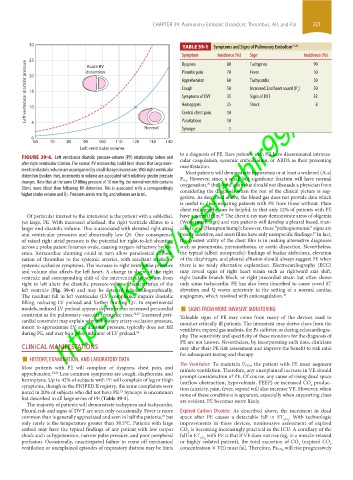
                    FIGURE  39-4.  Left ventricular diastolic pressure-volume (PV) relationship before and   cular coagulation, systemic embolization, or ARDS as their presenting
                    after right ventricular dilation. The normal PV relationship (solid line) shows that large incre-  manifestation.
                    ments in diastolic volume are accompanied by small changes in pressure. With right ventricular   Most patients will demonstrate hypoxemia or at least a widened (A-a)
                    distention (broken line), increments in volume are associated with relatively greater pressure   . However, since a small but significant fraction will have normal
                    changes. Note that at the same LV filling pressure of 10 mm Hg, the normal ventricle contains   P O 2  20
                                                                          oxygenation,  the blood-gas value should not dissuade a physician from
                    20 mL more blood than following RV distention. This is associated with a correspondingly   considering the diagnosis when the rest of the clinical picture is sug-
                                  ˙
                    higher stroke volume and Qt. Pressures are in mm Hg, and volumes are in mL.
                                                                          gestive. As described above, the blood gas does not provide data which
                                                                          is useful in discriminating patients with PE from those without. Plain
                                                                          chest radiography can be helpful, in that only 12% of patients with PE
                     Of particular interest to the intensivist is the patient with a sublethal,   have a normal film.  The chest x-ray may demonstrate areas of oligemia
                                                                                        29
                    yet large, PE. With increased afterload, the right ventricle dilates to a   (Westermark sign) and rare patients will develop a pleural based, trun-
                    larger end-diastolic volume. This is associated with elevated right atrial   cated cone (Hampton hump); however, these “pathognomonic” signs are
                    and ventricular pressures and abnormally low Q ˙ t. One consequence   poorly sensitive, and most films have only nonspecific findings.  In fact,
                                                                                                                       29
                    of raised right atrial pressure is the potential for right-to-left  shunting   the greatest utility of the chest film is in making alternative diagnoses
                    across a probe patent foramen ovale, causing oxygen-refractory hypox-  such as pneumonia, pneumothorax, or aortic dissection. Nevertheless,
                    emia.  Intracardiac  shunting  could  in  turn  allow  paradoxical  emboli-  the typical (albeit nonspecific) findings of basilar atelectasis, elevation
                    zation of thrombus to the systemic  arteries,  with resultant stroke  or   of the diaphragm, and pleural effusion should always suggest PE when
                    systemic occlusive symptoms. The increase in right ventricular pressure   there  is  no  ready  alternative  explanation.  Electrocardiography  (ECG)
                    and volume also affects the left heart. A change in shape of the right   may reveal signs of right heart strain such as rightward axis shift,
                    ventricle and corresponding shift of the interventricular septum from   right bundle branch block, or right precordial strain but often shows
                    right to left alters the diastolic pressure-volume characteristics of the   only sinus tachycardia. PE has also been described to cause coved ST
                    left  ventricle  (Fig. 39-4)  and  may  be  detected  echocardiographically.   elevation and  Q waves  anteriorly  in the  setting of  a normal cardiac
                    The resultant fall in left ventricular (LV) compliance impairs diastolic     angiogram, which resolved with anticoagulation. 30
                    filling, reducing LV preload and further limiting Q ˙ t. In experimental
                    models, reduced LV preload appears dependent on increased pericardial     ■  SIGNS FROM MORE INVASIVE MONITORING
                    constraint as the pulmonary vascular resistance rises. 26,27  Increased peri-  Valuable signs of PE may come from many of the devices used to
                    cardial constraint may explain why pulmonary artery occlusion pressure,   monitor critically ill patients. The intensivist may derive clues from the
                    meant to approximate LV end-diastolic pressure, typically does not fall     ventilator, expired gas analysis, the Pa catheter, or during echocardiogra-
                    during PE, and may be a poor indicator of LV preload. 26  phy. The sensitivity and specificity of these monitors for the diagnosis of
                                                                          PE are not known. Nevertheless, by incorporating such data, clinicians
                    CLINICAL MANIFESTATIONS                               may alter their PE risk assessment and improve the benefit to risk ratio
                        ■  HISTORY, EXAMINATION, AND LABORATORY DATA      for subsequent testing and therapy.
                    Most patients with PE will complain of dyspnea, chest pain, and   The Ventilator:  To maintain P CO 2 , the patient with PE must augment
                                                                          minute ventilation. Therefore, any unexplained increase in VE should
                    apprehension. 19,28  Less common symptoms are cough, diaphoresis, and   prompt consideration of PE. Of course, any cause of rising dead space
                    hemoptysis. Up to 42% of subjects with PE will complain of leg or thigh   (airflow obstruction, hypovolemia, PEEP) or increased CO  produc-
                    symptoms, though in the PIOPED II registry, the same complaints were   tion (anxiety, pain, fever, sepsis) will also increase VE. However, when
                                                                                                                      2
                    noted in 20% of subjects who did not have PE.  Syncope is uncommon   none of these conditions is apparent, especially when supporting clues
                                                     19
                    but described in all large series of PE (Table 39-1).  are evident, PE becomes more likely.
                     The majority of patients will demonstrate tachypnea and tachycardia.
                    Pleural rub and signs of DVT are seen only occasionally. Fever is more   Expired Carbon Dioxide:  As described above, the increment in dead
                    common than is generally appreciated and seen in half the patients,  but   space after PE causes a detectable fall in ET  . With technologic
                                                                   28
                                                                                                             CO 2
                    only rarely is the temperature greater than 38.5°C. Patients with large   improvements in these devices, noninvasive assessment of expired
                    emboli may have the typical findings of any patient with low output   CO  is becoming increasingly practical in the ICU. A corollary of the
                                                                            2
                    shock such as hypotension, narrow pulse pressure, and poor peripheral   fall in ET   with PE is that if VE does not rise (eg, in a muscle-relaxed
                                                                                CO 2
                    perfusion. Occasionally, unanticipated failure to come off mechanical   or highly sedated patient), the total excretion of CO  (expired CO
                                                                                                                             2
                                                                                                                  2
                    ventilation or unexplained episodes of respiratory distress may be hints   concentration × VE) must fall. Therefore, Pa CO 2  will rise  progressively

            section03.indd   321                                                                                       1/23/2015   2:07:32 PM

